
My collection of Vegan Middle Eastern Recipes covers the full scope of the cuisine with dips, soups, salads, mains, and more! You'll find everything you need to build a mezze spread, plan a dinner party, or just cook something different on a weeknight.
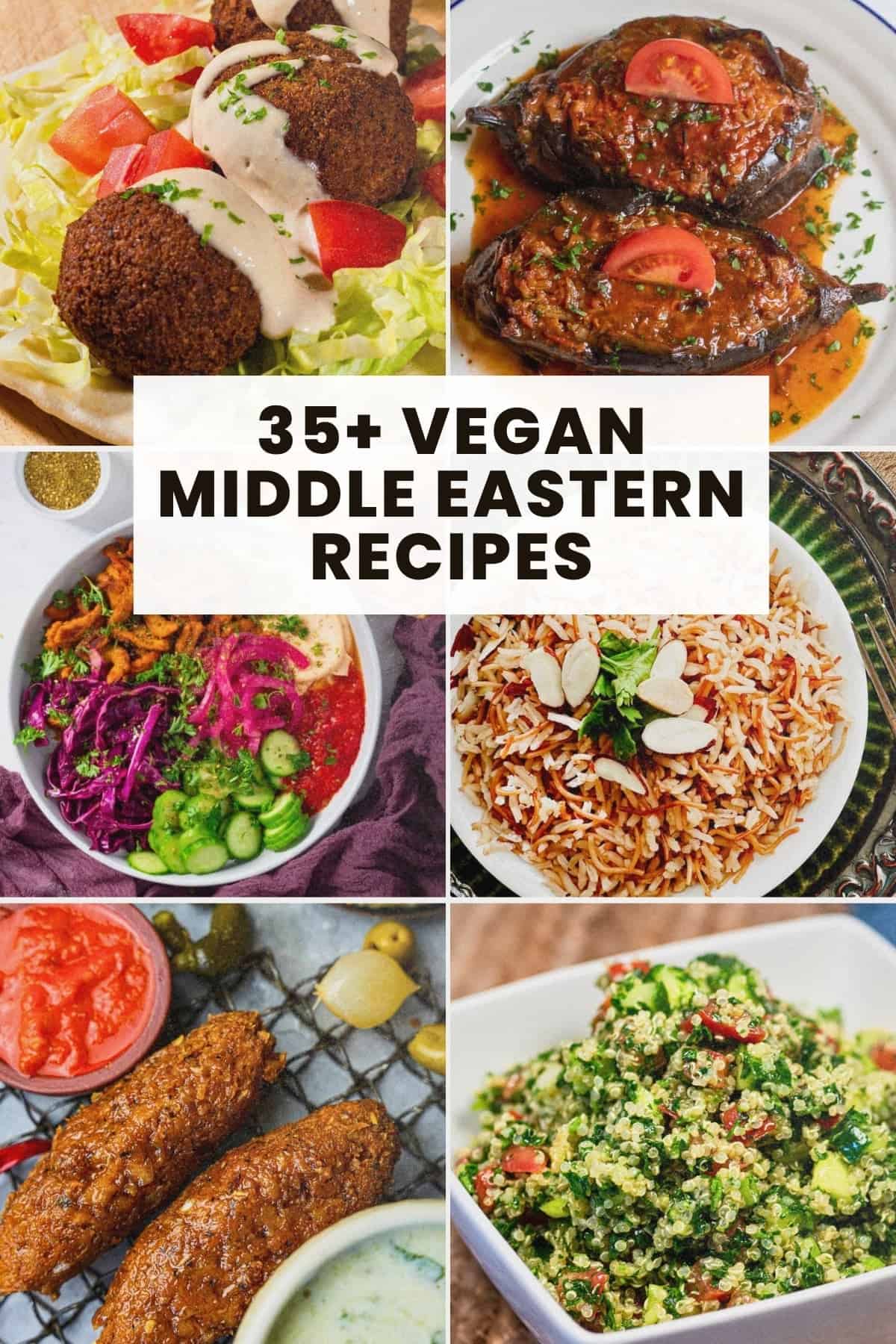
Did you know that Middle Eastern cuisine is one of the most naturally plant based food traditions on the planet? Legumes, fresh herbs, roasted vegetables, tahini, and warm spices have been the backbone of the region's cooking for centuries, long before "vegan" was a word anyone used.
What Is Middle Eastern Cuisine
Middle Eastern cooking spans a huge geographic and cultural range from Lebanon, Syria, Jordan, Palestine, Egypt, Israel, Turkey, Iran, and beyond. Each country has its own traditions, and they're all distinct. But across all of them, plant-based ingredients have always played a central role.
In fact, many traditional dishes were always meatless vegan recipes out of economic necessity or religious observance, such as during Lent, Ramadan, and fasting days.
Jump to:
Street Food and Sandwiches
Some of the world's best-known vegan Middle Eastern recipes are street food, so I felt I had to include my favorites. These recipes deliver that same delicious street food experience at home.
1. Vegan Falafel Pita with Tahini Sauce
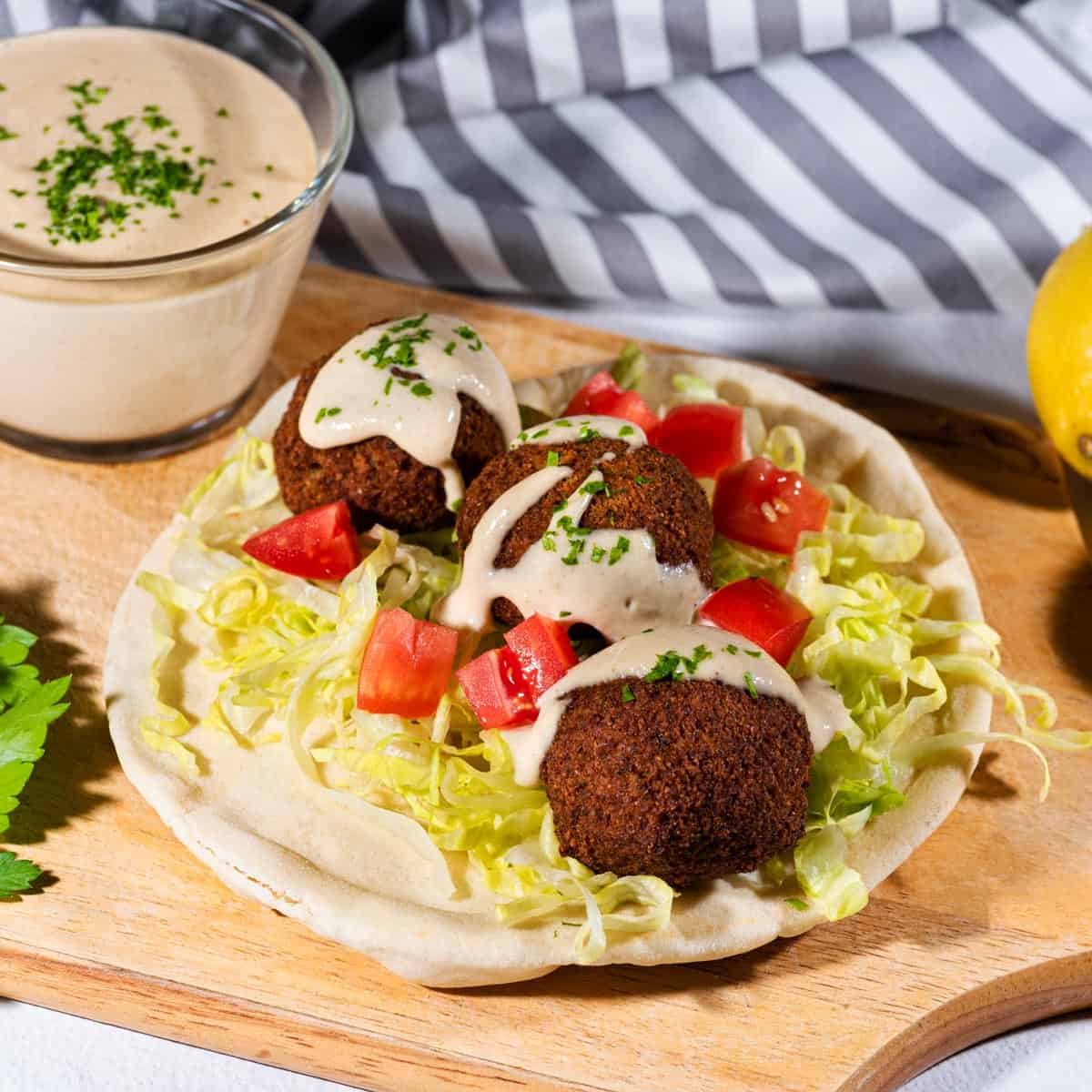
Crispy on the outside and tender on the inside, my falafel is authentic in flavor and super easy to make. This famous street food can be served in a pita with tahini sauce and veggies, as part of a bowl, or as an appetizer.
2. Vegan Kofta with Tzatziki Sauce
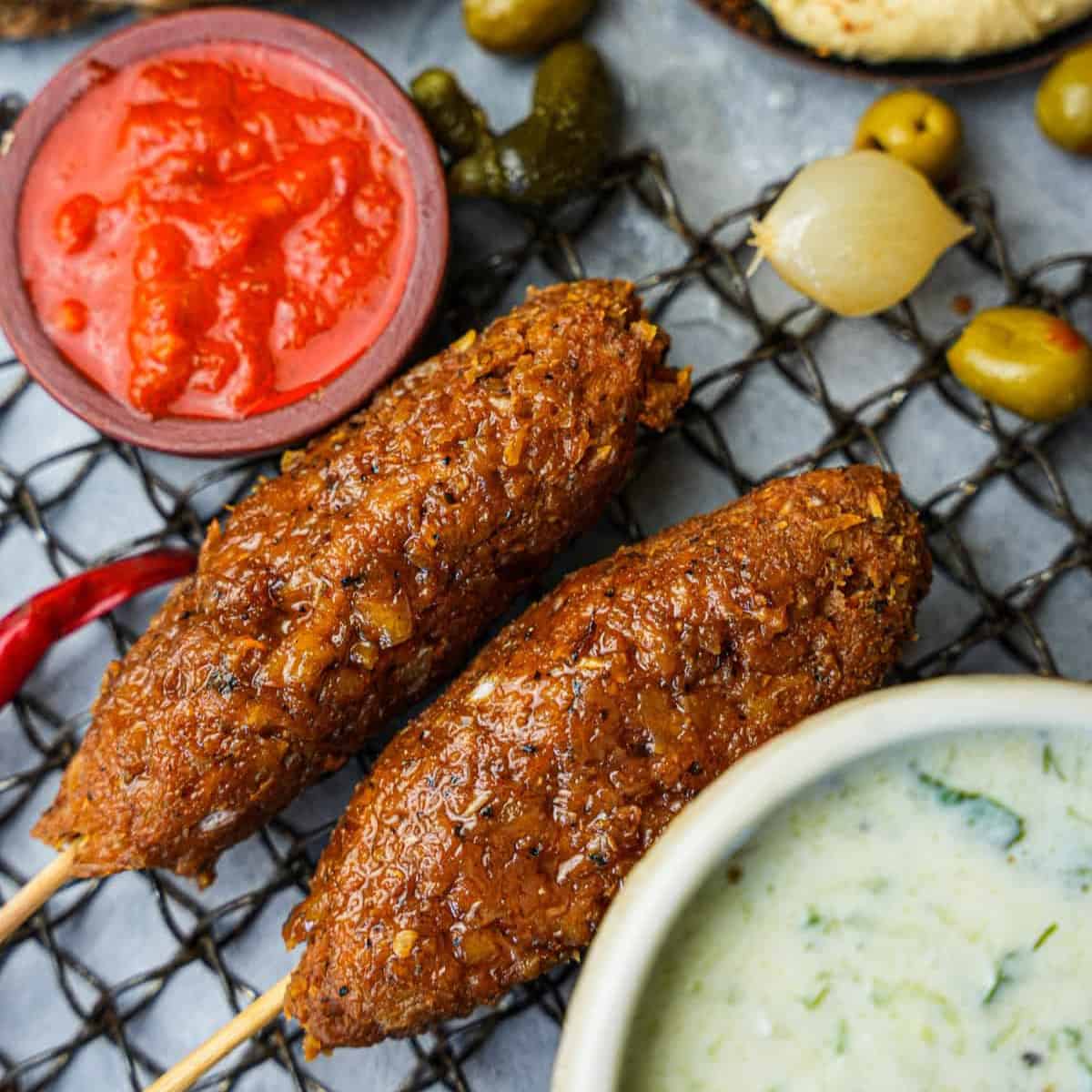
Kofta is a spiced meat skewer eaten throughout the Middle East and Mediterranean, and this vegan version is on point. It's full of amazing flavor, has the perfect texture, and holds its shape.
As a fellow vegan chef, I highly recommend giving this recipe a try!
3. Za'atar Fries with Tahini Dipping Sauce
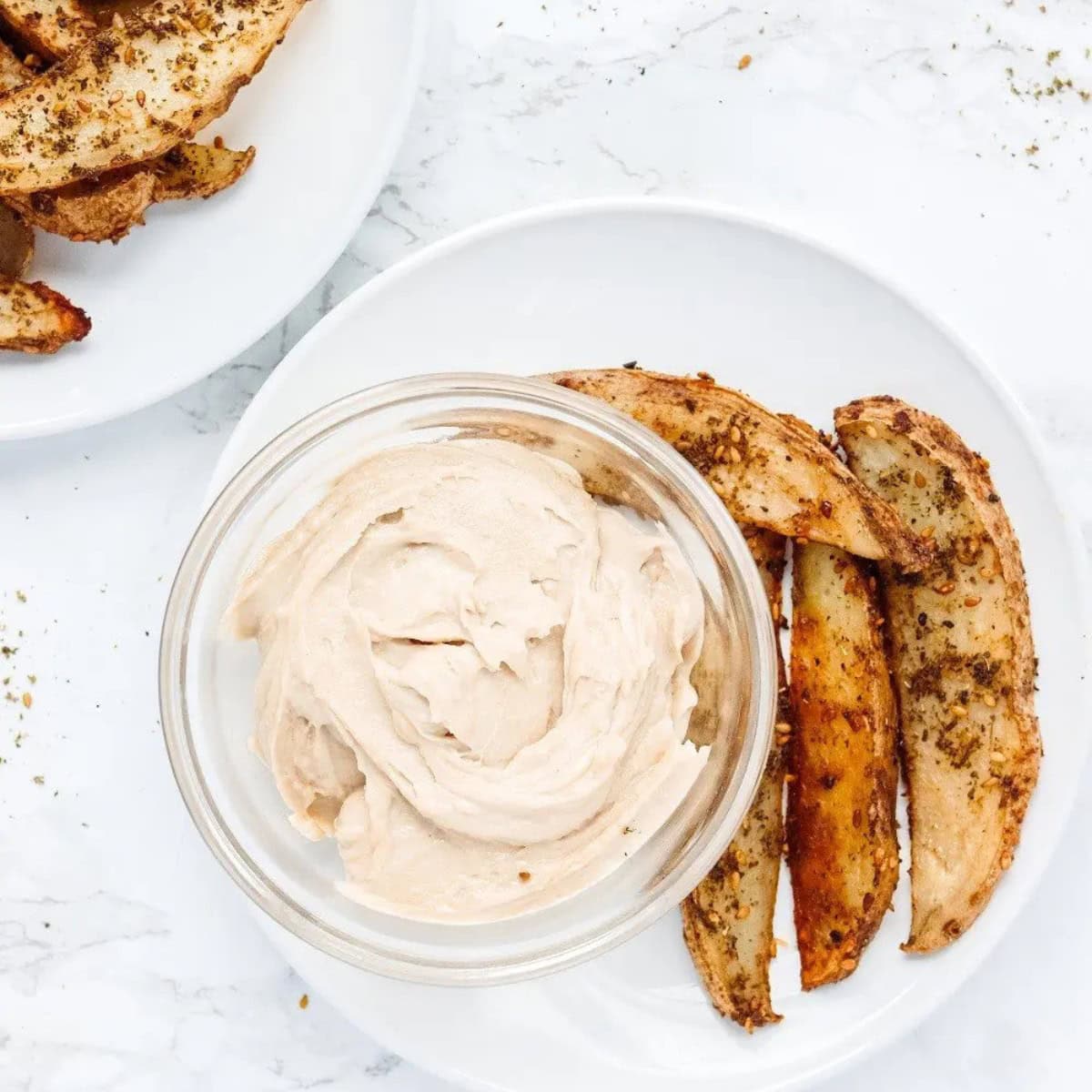
This recipe is oven-baked potato fries tossed in za'atar, an herby spice blend of dried thyme, sesame, and sumac used throughout the Middle East and Mediterranean!
The fries are flavorful, crispy, and served with an amazing tahini dipping sauce.
4. Vegan Shawarma Pita with Jackfruit
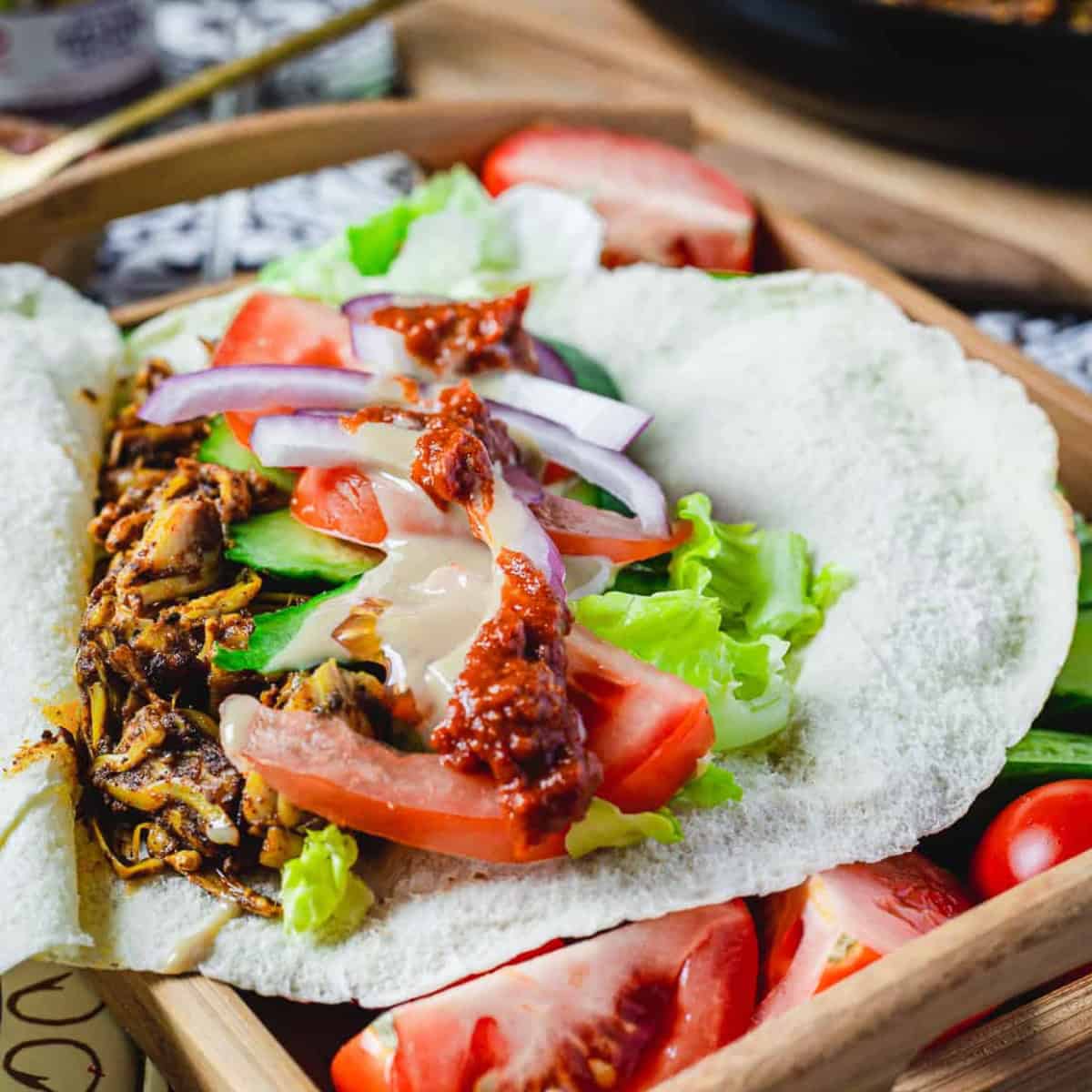
If you haven't tried vegan shawarma, you are going to fall in love. It's canned jackfruit cooked in a spice paste until the edges get crispy.
Then it's stuffed into pita bread with diced cucumber, tomato, red onion, creamy tahini dressing, and harissa.
Like my vegan carnitas, this is one of my favorite ways to use jackfruit!
5. Halabessa (Spicy Chickpea Soup)

Halabessa is Egyptian street food that defies easy categorization! Egyptians consider it simultaneously a drink and a snack.
It's chickpeas simmered in a cumin and tomato broth. You sip the broth first, then eat the chickpeas with the spoon.
You'll find Cairo street vendors selling it in the winter from carts decorated with colored lights.
6. Vegan Sabich Sandwich

Sabich is an Iraqi-Israeli street food sandwich that deserves far more attention outside of Tel Aviv. Made with fried eggplant, hummus, and pickles stuffed into pita, it's one of Tel Aviv's most iconic street foods.
The whole thing comes together in under 30 minutes, and it's an incredibly delicious Middle Eastern recipe.
Mezze: Dips, Spreads, and Small Plates
Mezze is a variety of small dishes set out together so everyone can graze, dip, and build their own plate. It's one of the best ways to try multiple vegan Middle Eastern recipes.
Pick two or three dips, a salad, and serve with warm pita, and you have yourself a meal.
1. Muhammara (Syrian Red Pepper and Walnut Dip)
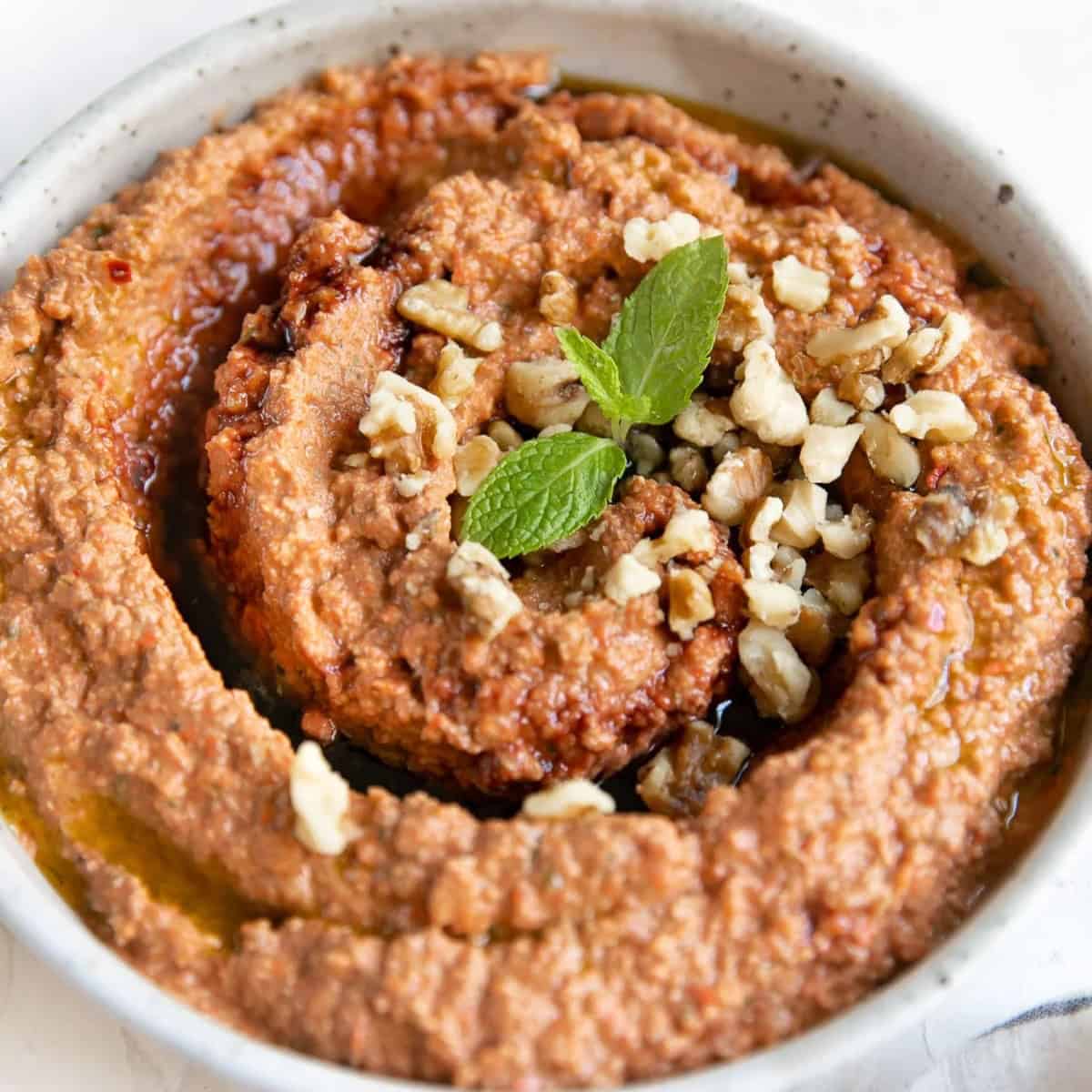
If you've only ever put hummus on the table, muhammara will change what you think a dip can taste like.
This naturally vegan Syrian spread from the city of Aleppo is made by blending roasted red bell peppers with toasted walnuts, pomegranate molasses, Aleppo pepper flakes, breadcrumbs, and olive oil. It's simultaneously smoky, sweet, tangy, and gently spicy all at once.
Serve with warm pita or alongside other mezze dips.
2. Ful Medames (Egyptian Fava Beans)
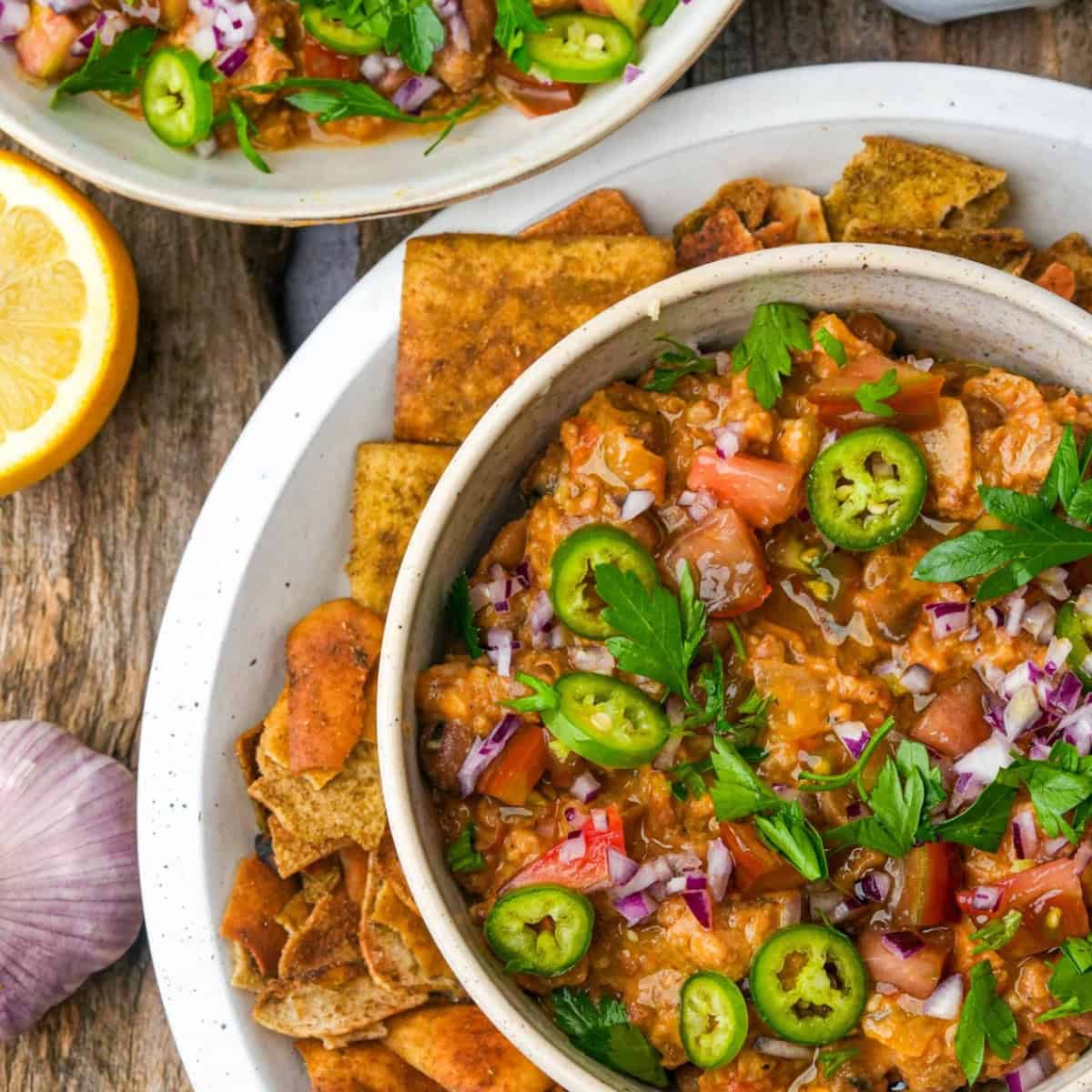
Ful medames is Egypt's national dish and one of the oldest continuously eaten foods in human history. To keep things easy, this version uses canned fava beans, cooked down with onion, tomato, cumin, coriander, and paprika, finished with a generous pour of tahini and fresh lemon.
You can mash them thick like a dip or leave them chunkier like a stew. Ready in under 30 minutes, deeply filling, and high in plant protein.
3. Garlic Hummus (Oil-Free)
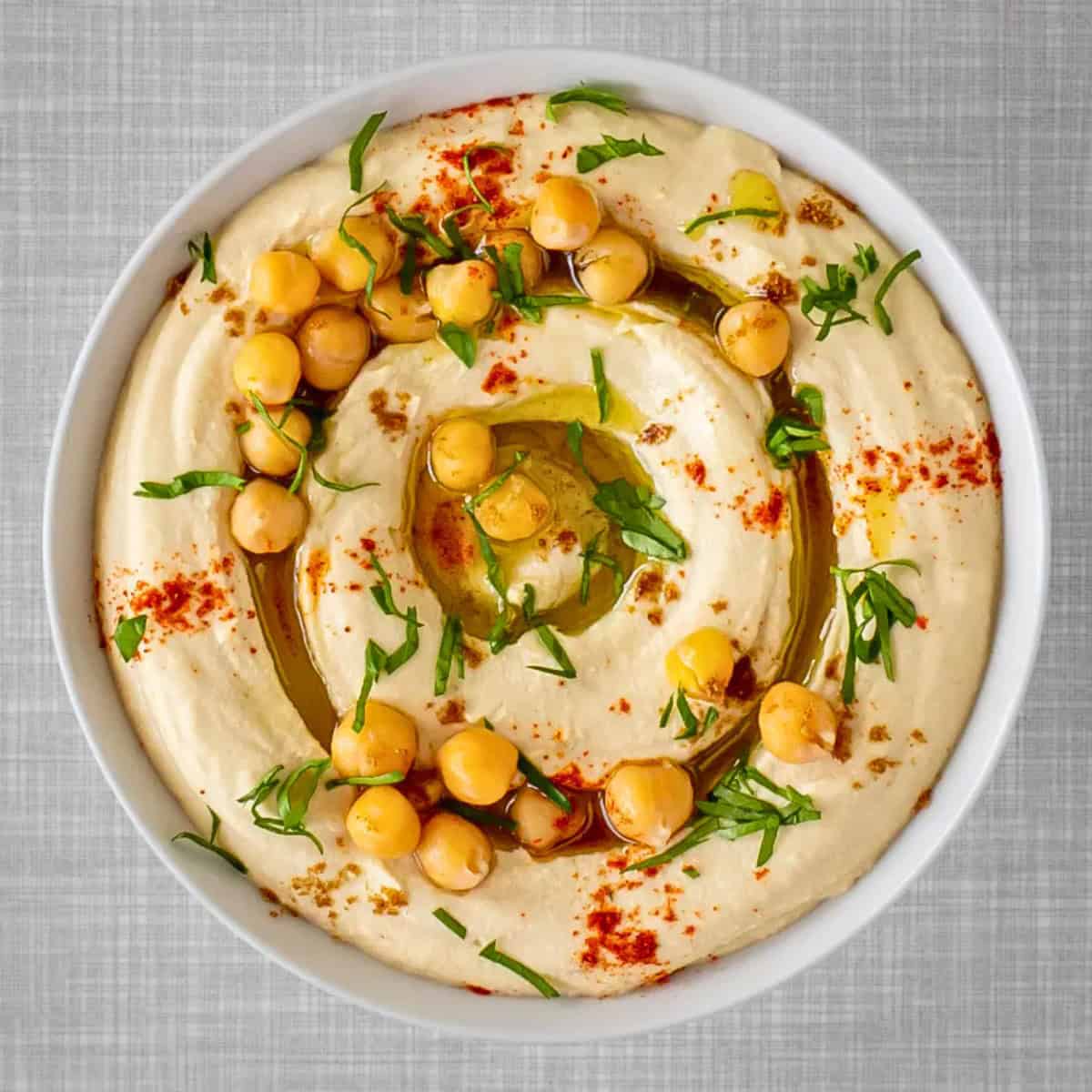
I had to include at least one traditional-style hummus! This oil-free version keeps things light while still delivering the creamy, garlicky hummus you want. Just chickpeas, tahini, lemon, and garlic. Works perfectly as a dip, sandwich spread, or added to grain bowls.
4. Baba Ganoush
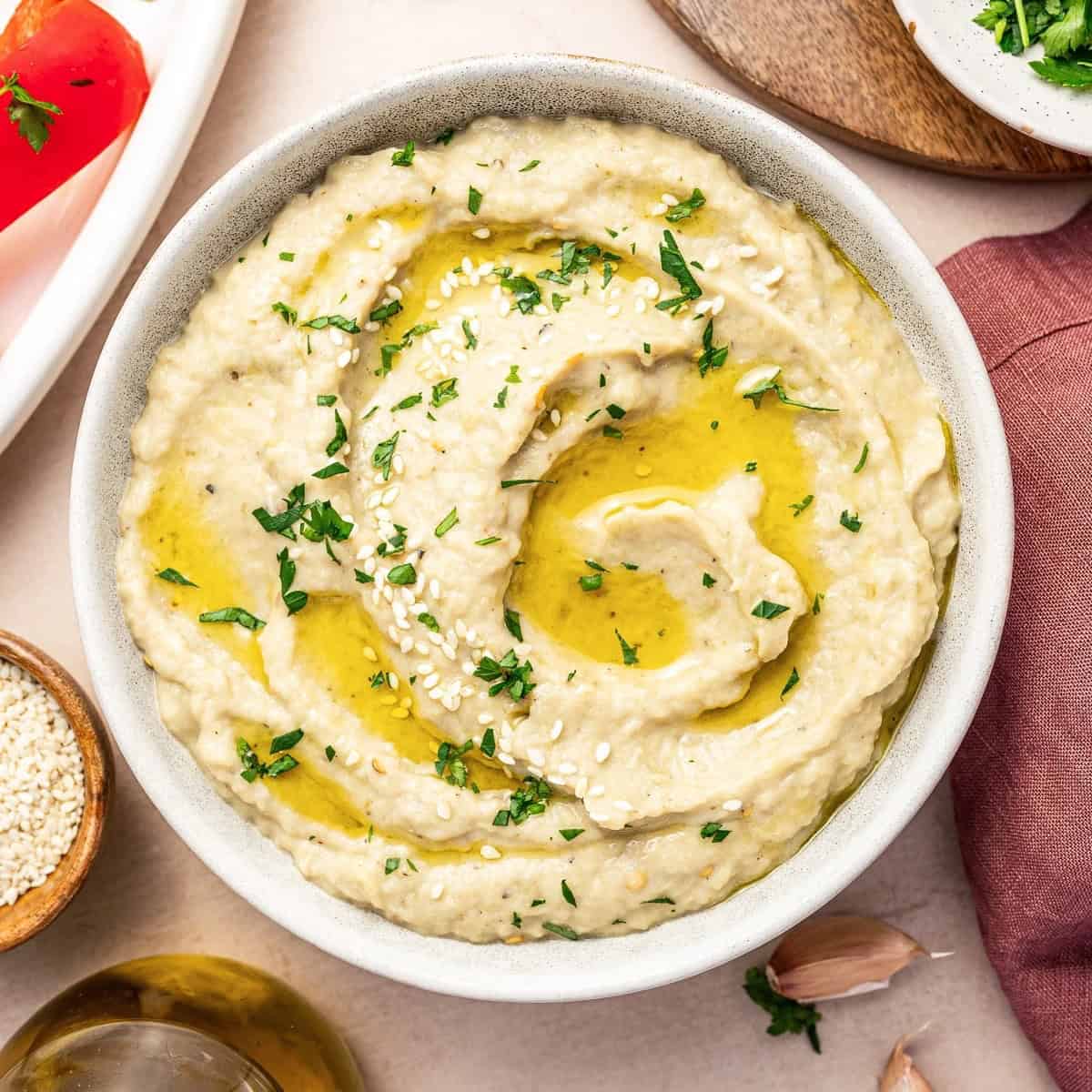
Oven-roasted eggplant blended with tahini, lemon juice, and garlic. It's creamy, smoky, and incredibly delicious.
This vegan Middle Eastern recipe is one of my favorites and a staple that belongs on every mezze table.
5. Mutabal (Middle Eastern Eggplant Dip)
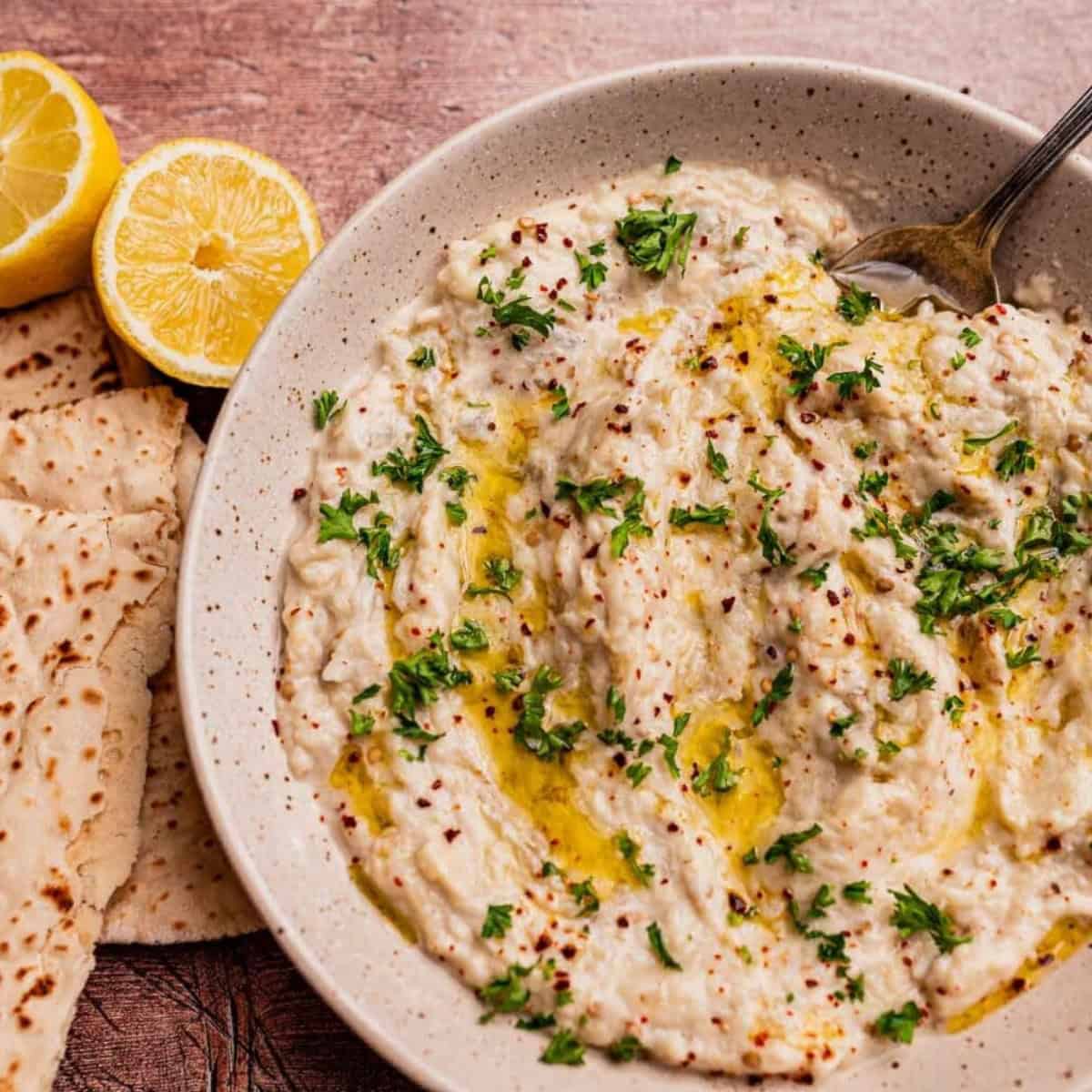
Similar to baba ganoush, mutabal is its creamier, tangier cousin. Mutabal uses more tahini and yogurt (vegan yogurt in this case) for a richer, smoother texture.
If you love eggplant like me, I suggest you try both!
6. Acili Ezme (Turkish Salsa)
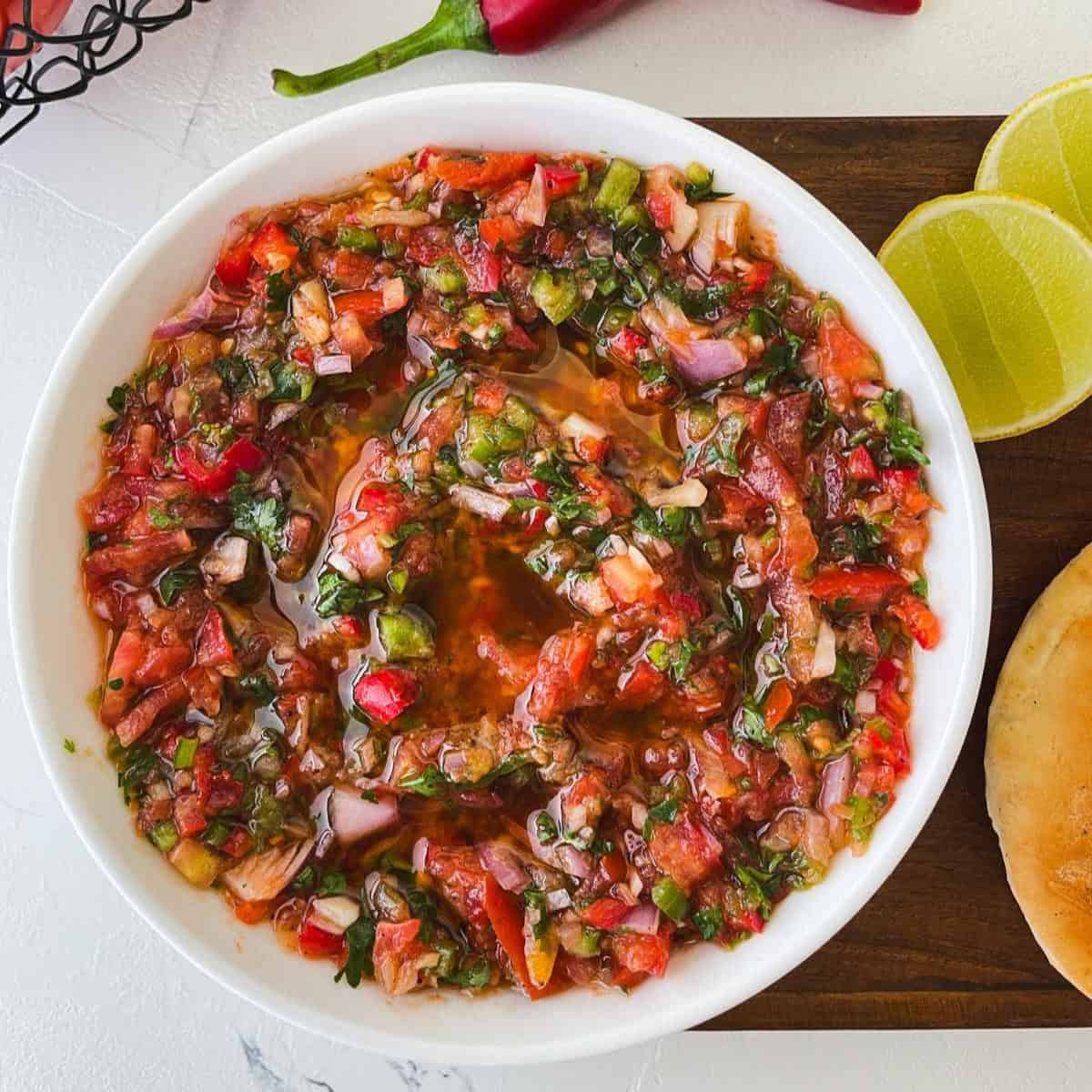
Acili ezme is a Turkish spicy tomato dip that's closer to a fresh salsa than a cooked dip. It's made with ripe tomatoes, bell peppers, onion, garlic, and cilantro, finely chopped and seasoned with lemon juice, olive oil, Aleppo pepper flakes, and cumin.
You'll find it at virtually every Turkish kebab restaurant as a free appetizer alongside bread. This recipe takes just 10 minutes!
7. Beet Hummus
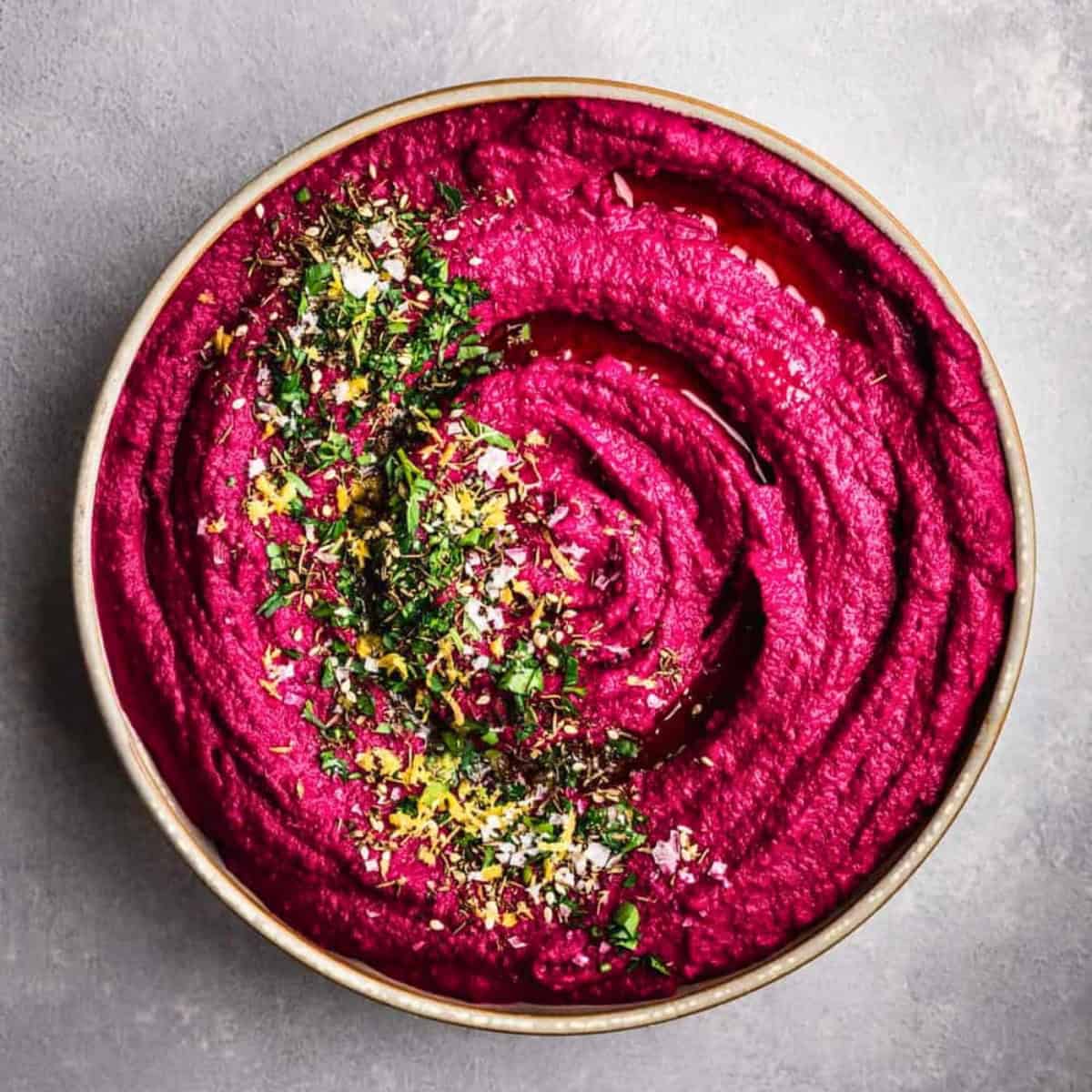
Roasted beets blended into classic hummus create a stunning magenta dip that tastes as good as it looks. The beets add an earthy sweetness that pairs beautifully with tahini and lemon.
This is the recipe to make when you want your mezze spread to turn heads.
Salads
Middle Eastern salads are not side dishes in the way Western salads are. They're bright, acidic, herb-forward, and often the most refreshing part of a heavy meal.
1. Quinoa Tabbouleh Salad
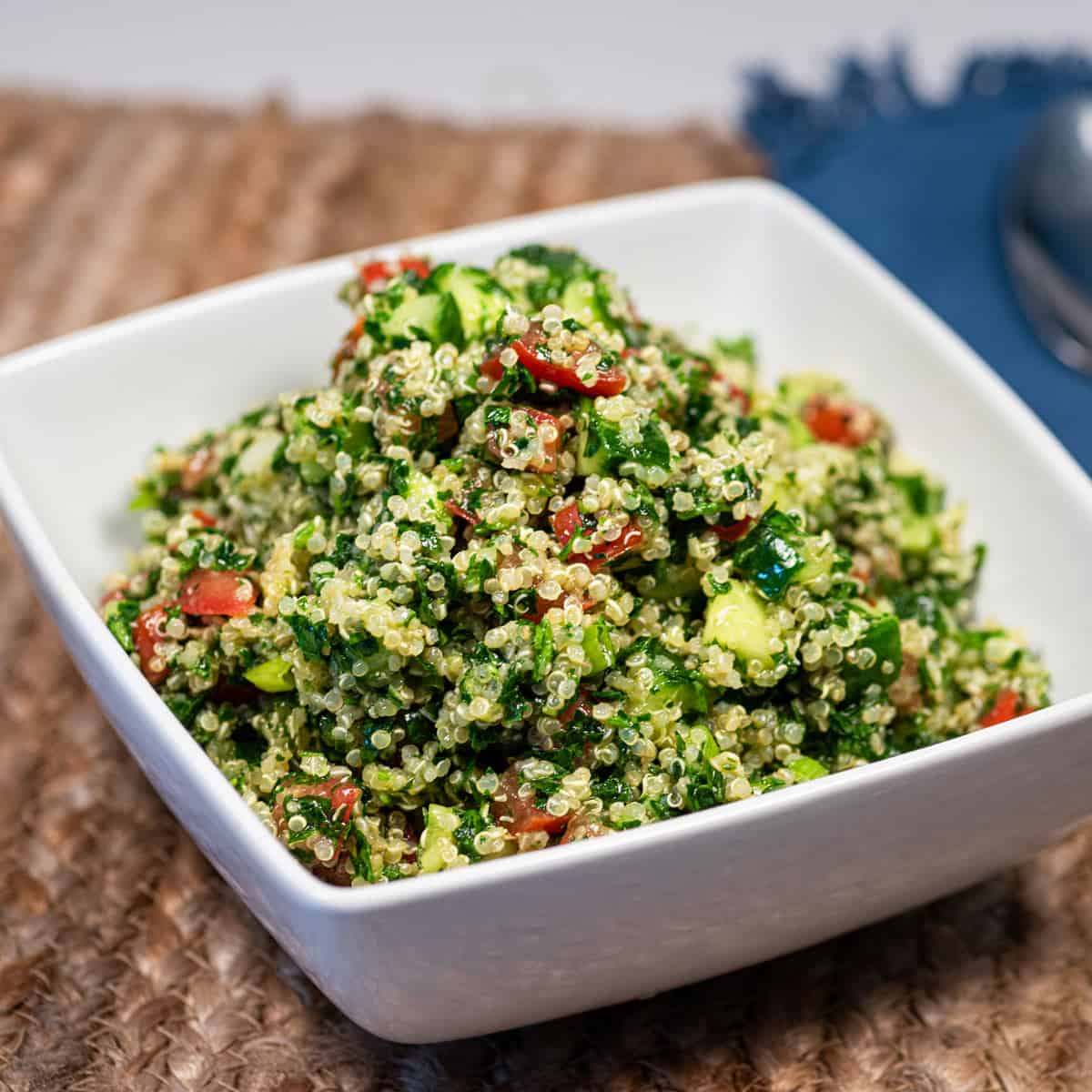
My version takes classic tabbouleh and swaps bulgur for quinoa while keeping everything else authentic with loads of fresh parsley, mint, diced cucumber, tomatoes, and a bright lemon and olive oil dressing.
The quinoa adds more protein and a slightly nutty bite!
2. Balela Salad (Middle Eastern Bean Salad)
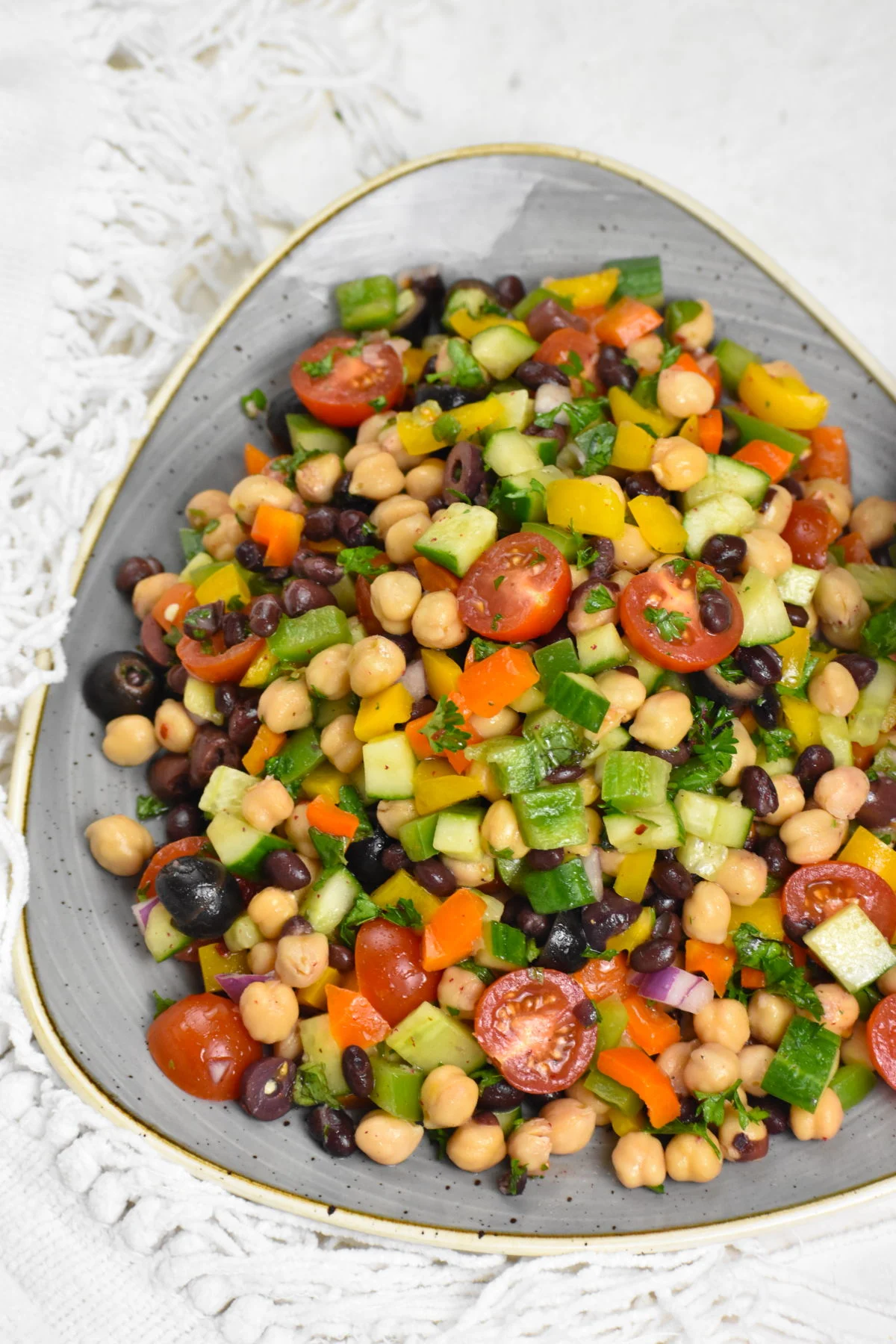
Balela (pronounced bah-lay-la) translates to "cooked chickpeas" in Arabic and is an ancient bean salad eaten across the Middle East. This version combines chickpeas and black beans with diced tomatoes, cucumber, bell pepper, red onion, fresh parsley, fresh mint, and olives, tossed in a zesty lemon-sumac dressing.
It requires zero cooking and comes together in about 15 minutes! If you're looking for super simple Arabic recipes, this is a good place to start.
3. Syrian Bulgur Wheat Salad
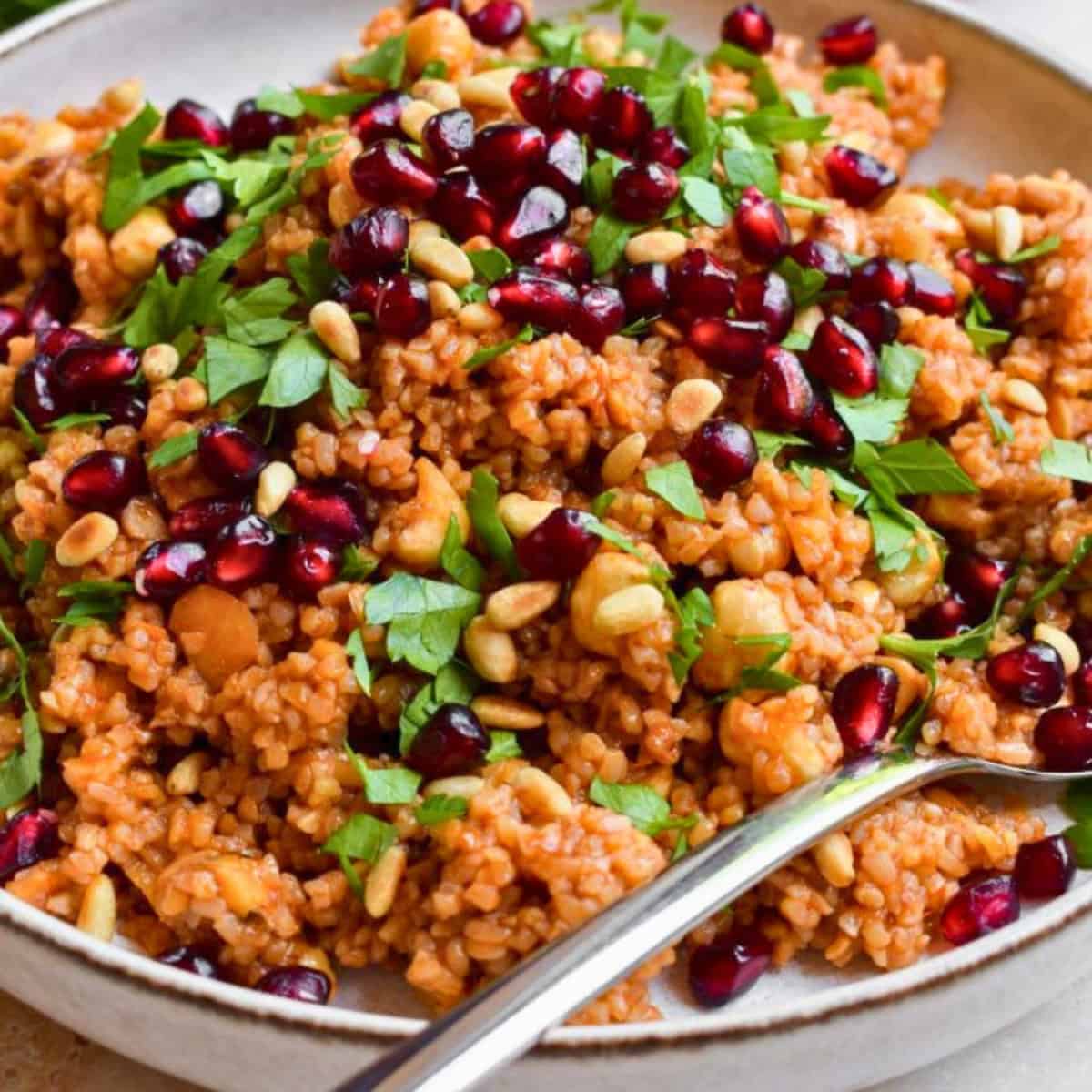
This is a bulgur salad in the spirit of tabbouleh but with its own Syrian flavor profile. It's more grain-centric, more substantial, and different enough to serve alongside tabbouleh.
Bulgur wheat is soaked in hot water rather than cooked, giving it a lighter texture than rice or pasta. It's then combined with fresh herbs, vegetables, and a bright lemon dressing.
4. Israeli Salad
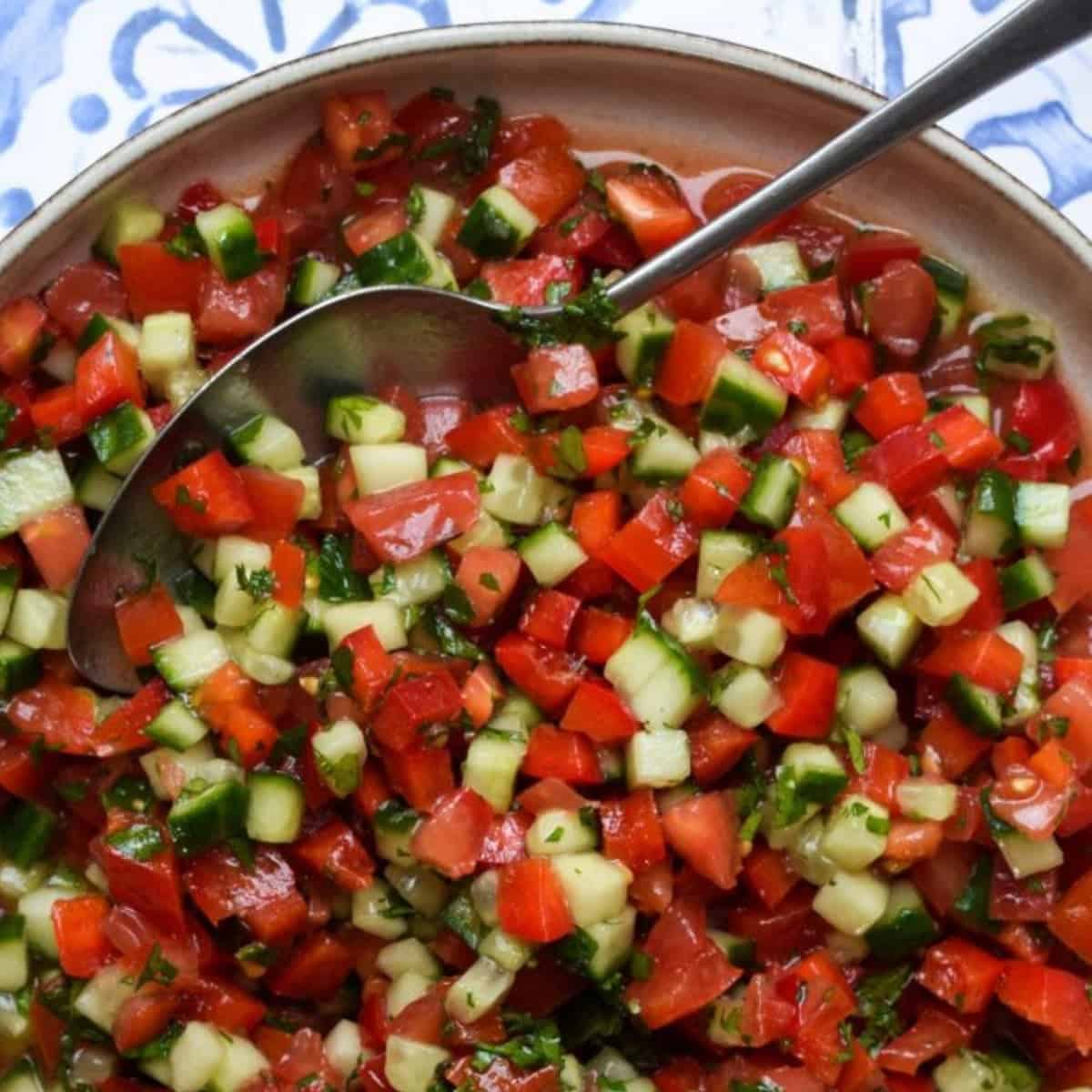
Israeli salad is the foundation of dozens of Middle Eastern meals. Made with finely diced tomato and cucumber, red onion, and parsley, dressed with olive oil, lemon, and salt.
I love to think of it as Israeli pico de gallo!
5. Easy Lebanese Salad
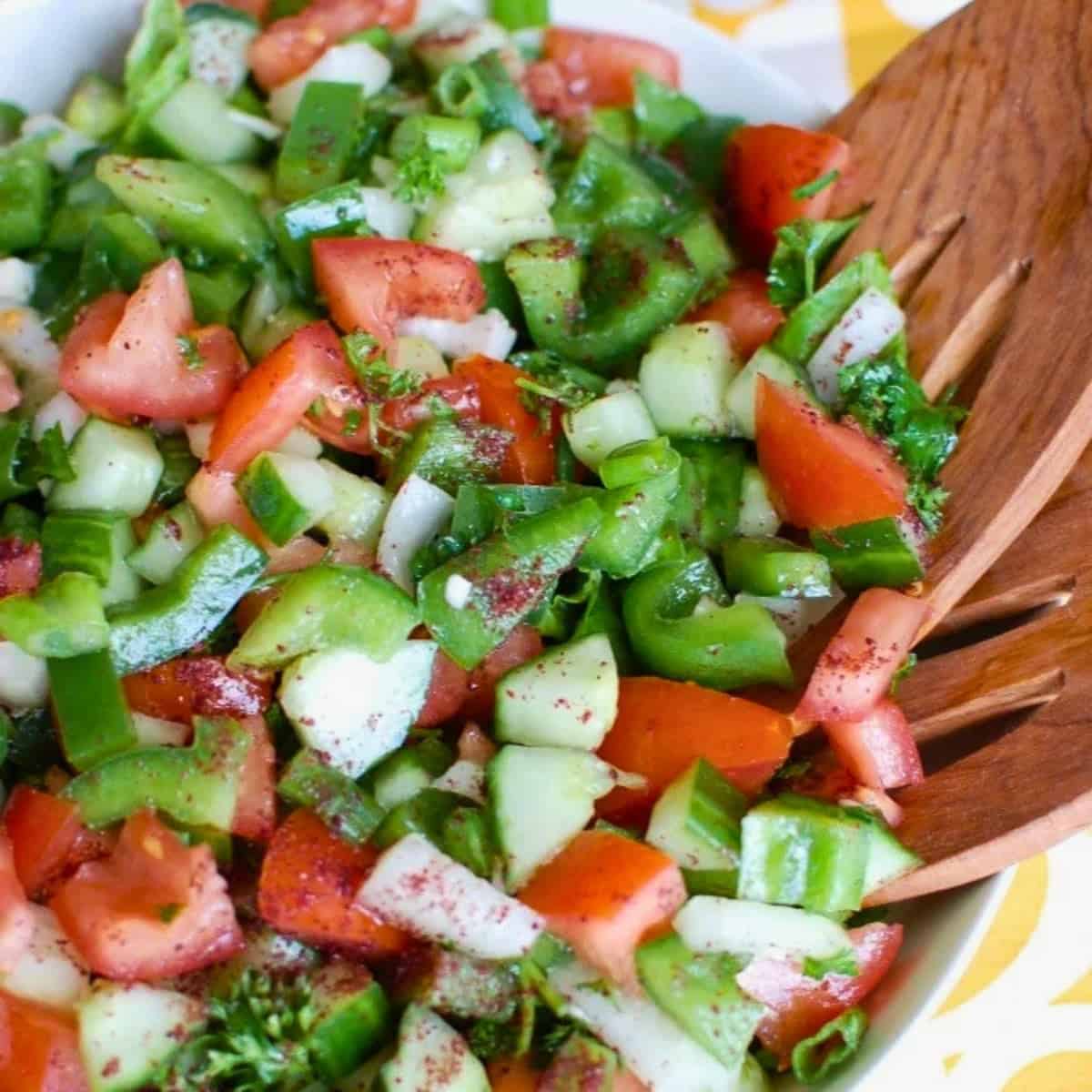
This Lebanese salad is a simple chopped salad similar to Israeli salad but with Lebanese herb and spice inflections. What I love about this recipe is how it reflects how the salad is actually eaten in Lebanese homes.
6. Fattoush Salad
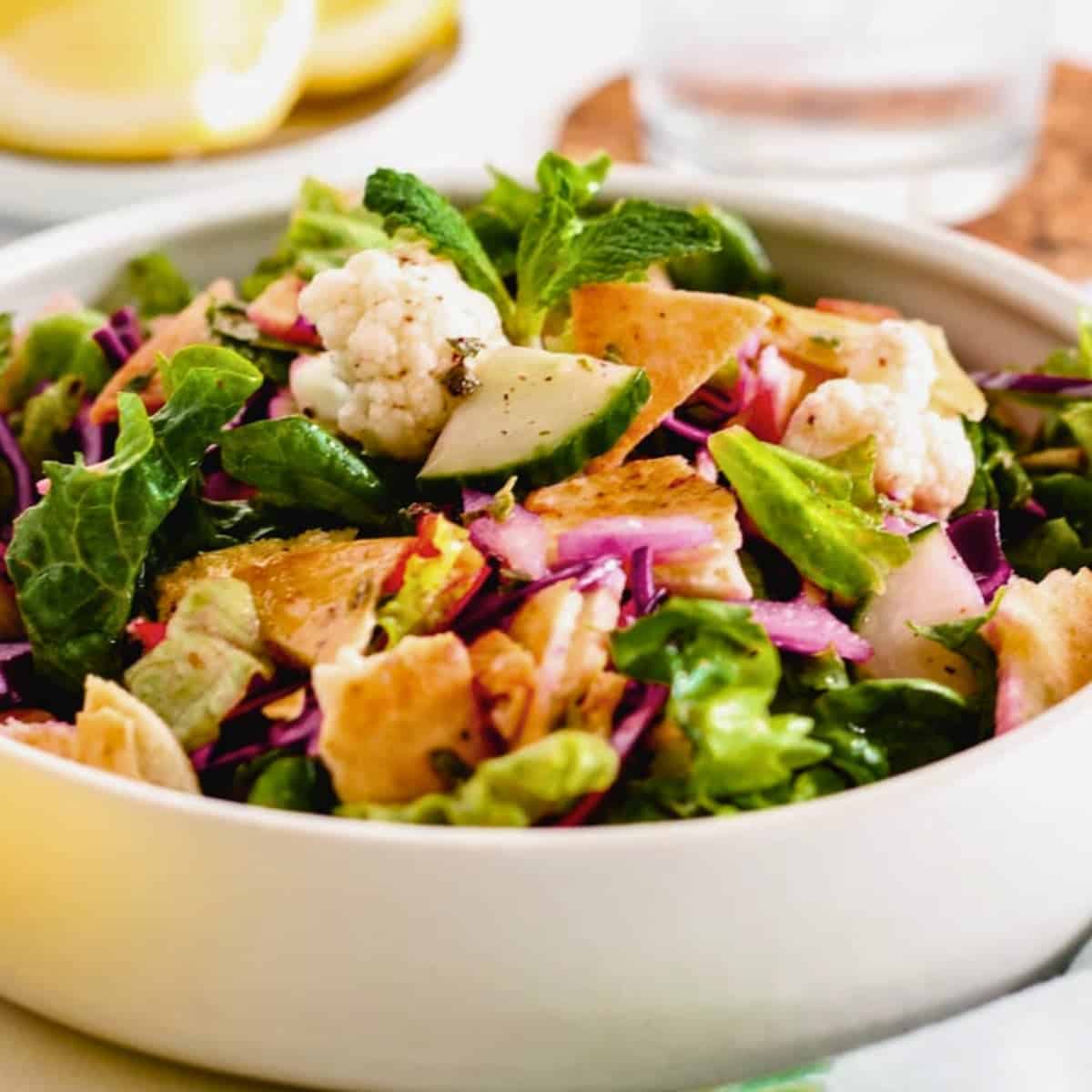
Fattoush is Lebanon's bread salad with crispy toasted or fried pita pieces tossed with seasonal vegetables such as romaine, cucumber, tomato, cauliflower, red cabbage, bell pepper, and fresh mint, all tossed in a tangy dressing built on sumac and lemon.
The pita is what makes it fattoush rather than just a chopped salad, so the quality matters.
7. Cold Middle Eastern Lentil Salad
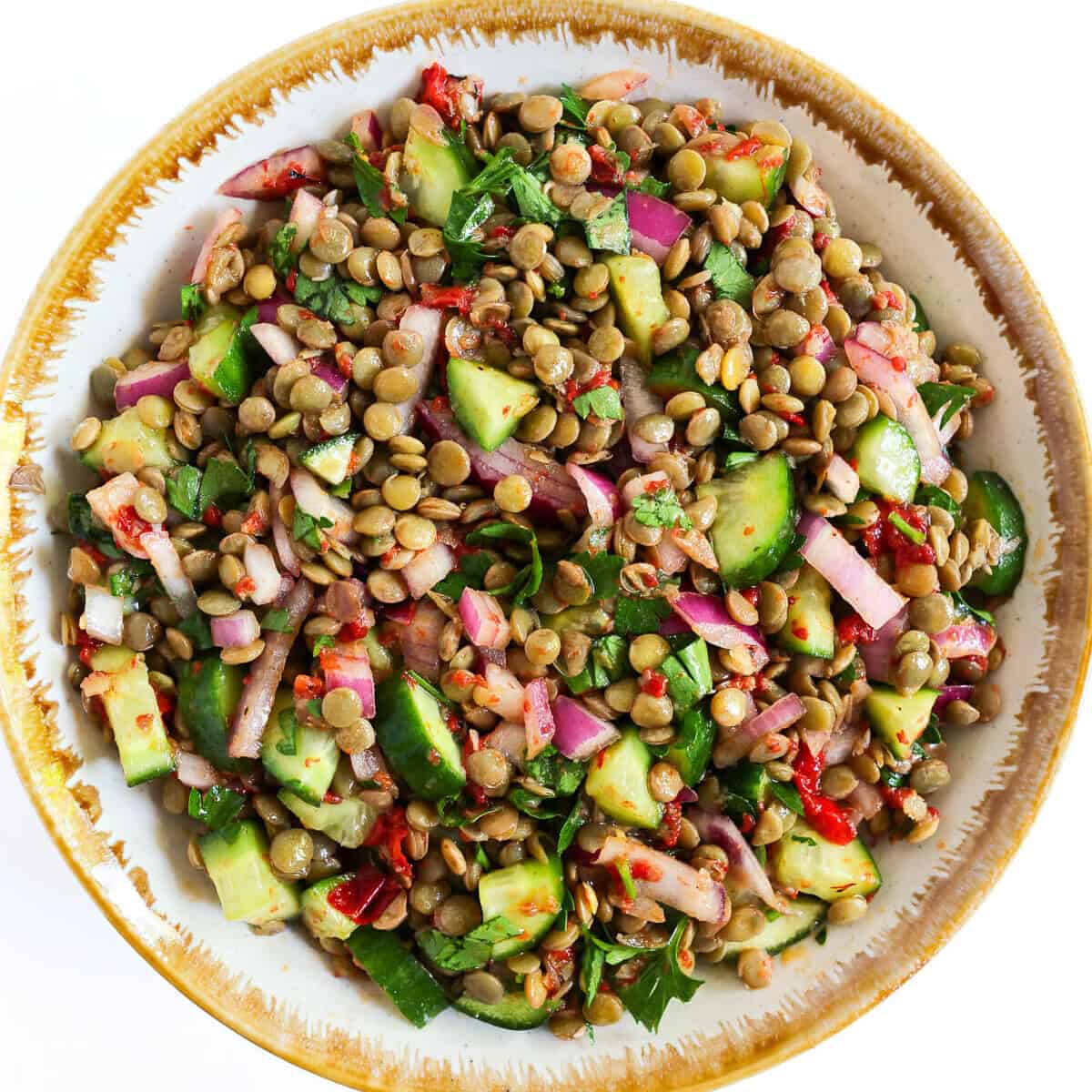
A substantial cold lentil salad in the Middle Eastern style. It's crafted with lentils dressed while warm with olive oil, lemon, and warm spices like cumin and coriander, then chilled and served with fresh herbs, cucumber, and tomato.
It holds up beautifully for days and is satisfying enough to eat as a standalone meal.
Soups and Stews
These are the heart of vegan Middle Eastern cooking. Slow-simmered soups and stews that fill a kitchen with fragrant smells and feed a crowd from a single pot.
1. Lebanese Lentil Soup (Shorbat Adas)
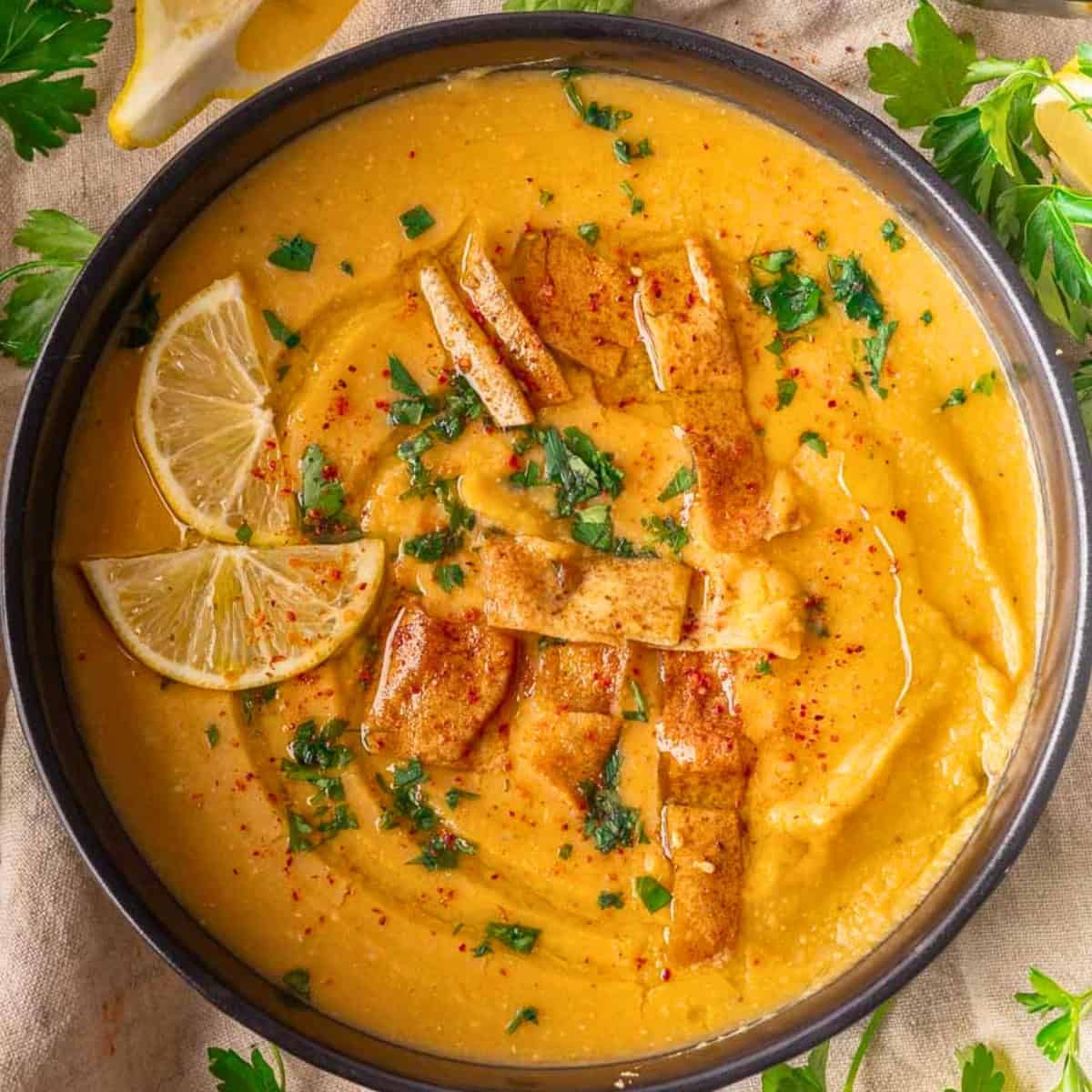
Shorbat adas means "lentil soup" in Arabic, and this version is a cherished family recipe. Made with red lentils, onions, garlic, carrots, and potatoes simmered in a cumin and turmeric-spiced broth until golden and silky.
It's make-ahead friendly, tastes better the next day, and is totally vegan as long as you use vegetable broth.
2. Ghormeh Sabzi (Persian Herb Stew)
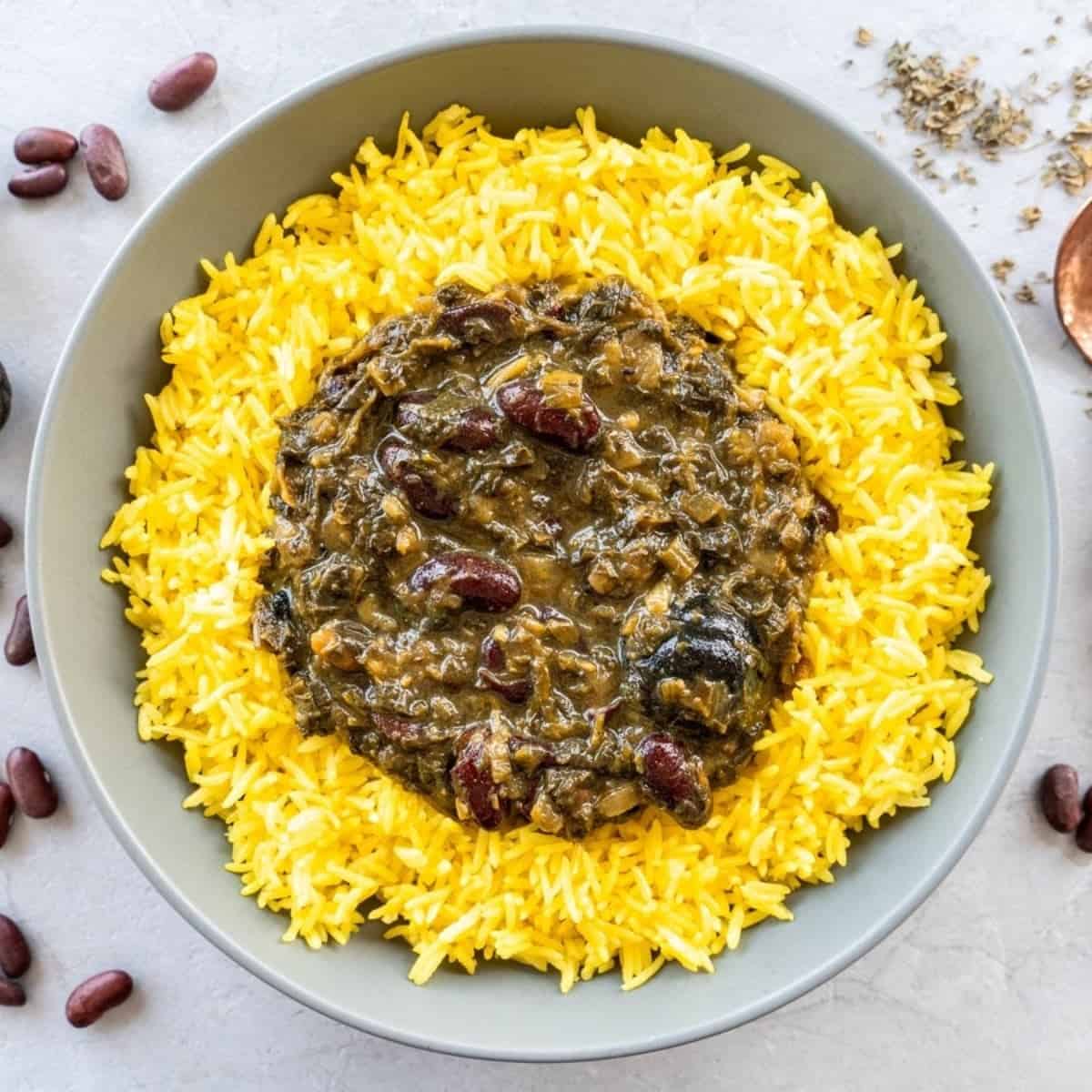
Ghormeh sabzi is Iran's national dish! The base is a mixture of fresh herbs, including parsley, cilantro, fenugreek, and scallions, cooked down until almost dry and fragrant. Then kidney beans, water, and dried Persian limes (limoo amani) go in, and everything simmers low and slow.
This is one of the most delicious vegan Middle Eastern recipes on my list if you're looking for something classic to try.
3. Turkish Red Lentil Soup
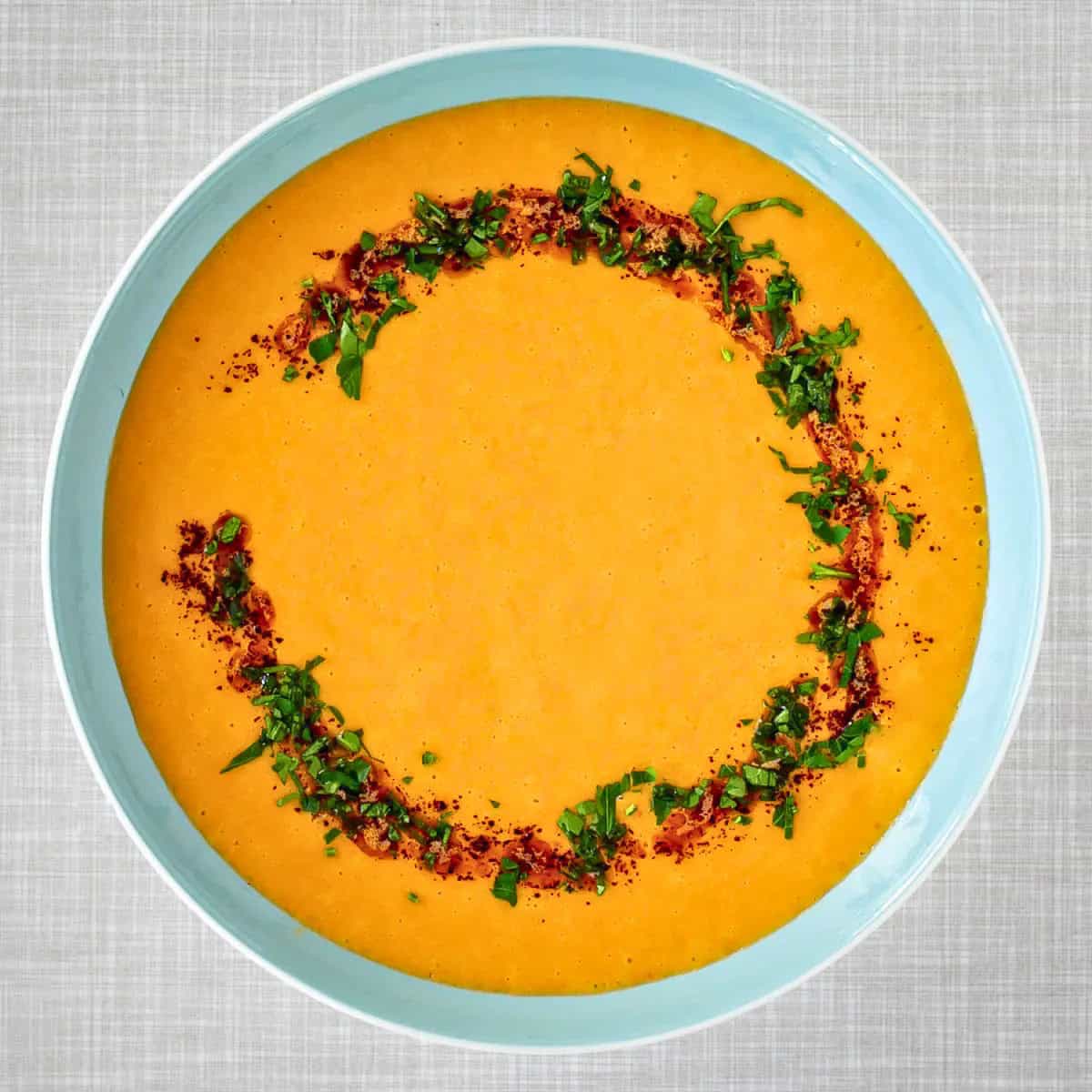
Also known as mercimek çorbası, this is Turkey's most beloved everyday soup. It's made with red lentils pureed smooth with onion, garlic, cumin, and paprika, and finished with mint.
4. Lebanese-Inspired Vegan Fasolia
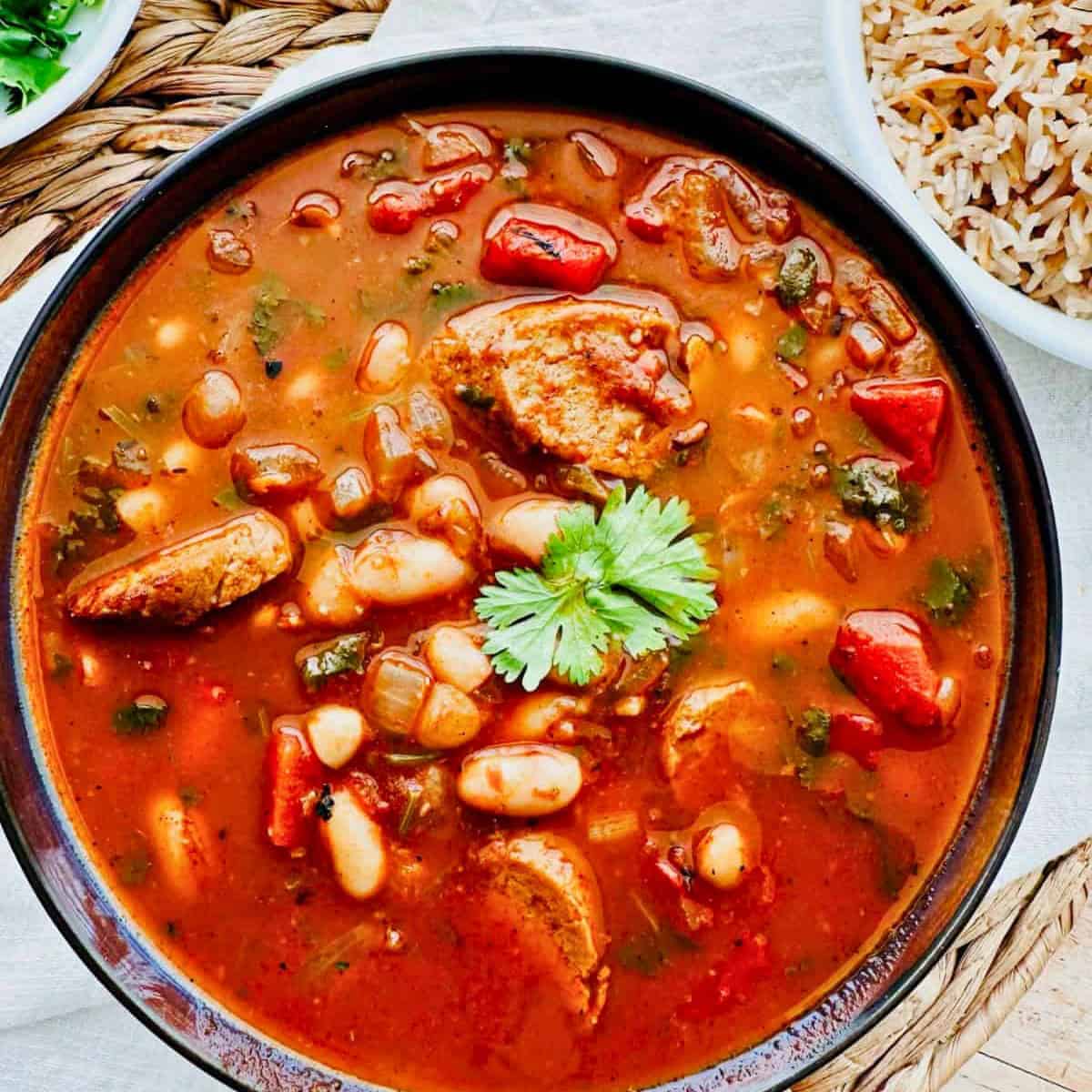
Fasolia is the Arabic word for beans, and this Lebanese-style white bean stew is delicious. It's white cannellini beans simmered in a garlic and tomato based sauce with olive oil and Middle Eastern spices.
Ready in about 40 minutes, it pairs perfectly with rice.
Main Dishes
These are my go-to vegan Middle Eastern recipes for dinner. You'll find good options for date night and easy family meals.
1. Mujadara
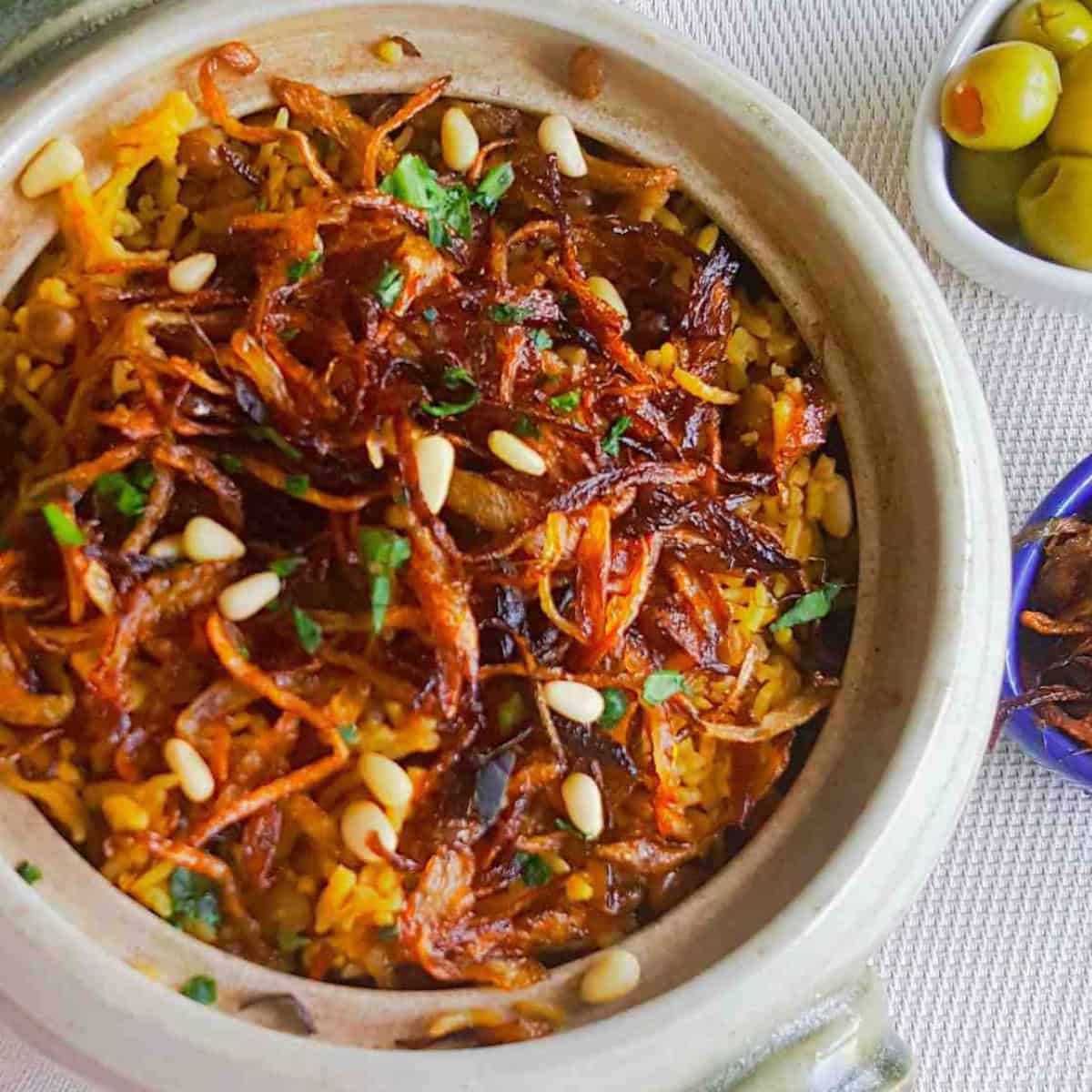
Mujadara, also known as Mudardara or Madardara, is a beloved Middle Eastern vegan comfort dish that combines humble ingredients to create a truly satisfying meal. The recipe is naturally both vegan and gluten-free.
If you only cook one recipe from this list, make mujadara. The dish appears in an Iraqi cookbook from 1226.
2. Vegan Shawarma Bowl

This is one of my favorites! Picture soy curls marinated in classic shawarma spices and pan-fried until slightly crispy and charred, served bowl-style over hummus with pickled red onions, harissa, fresh vegetables, and warm pita.
Trust me, this is one of my vegan Middle Eastern recipes that's even better than it looks and sounds!
3. Baharat Chickpea Couscous
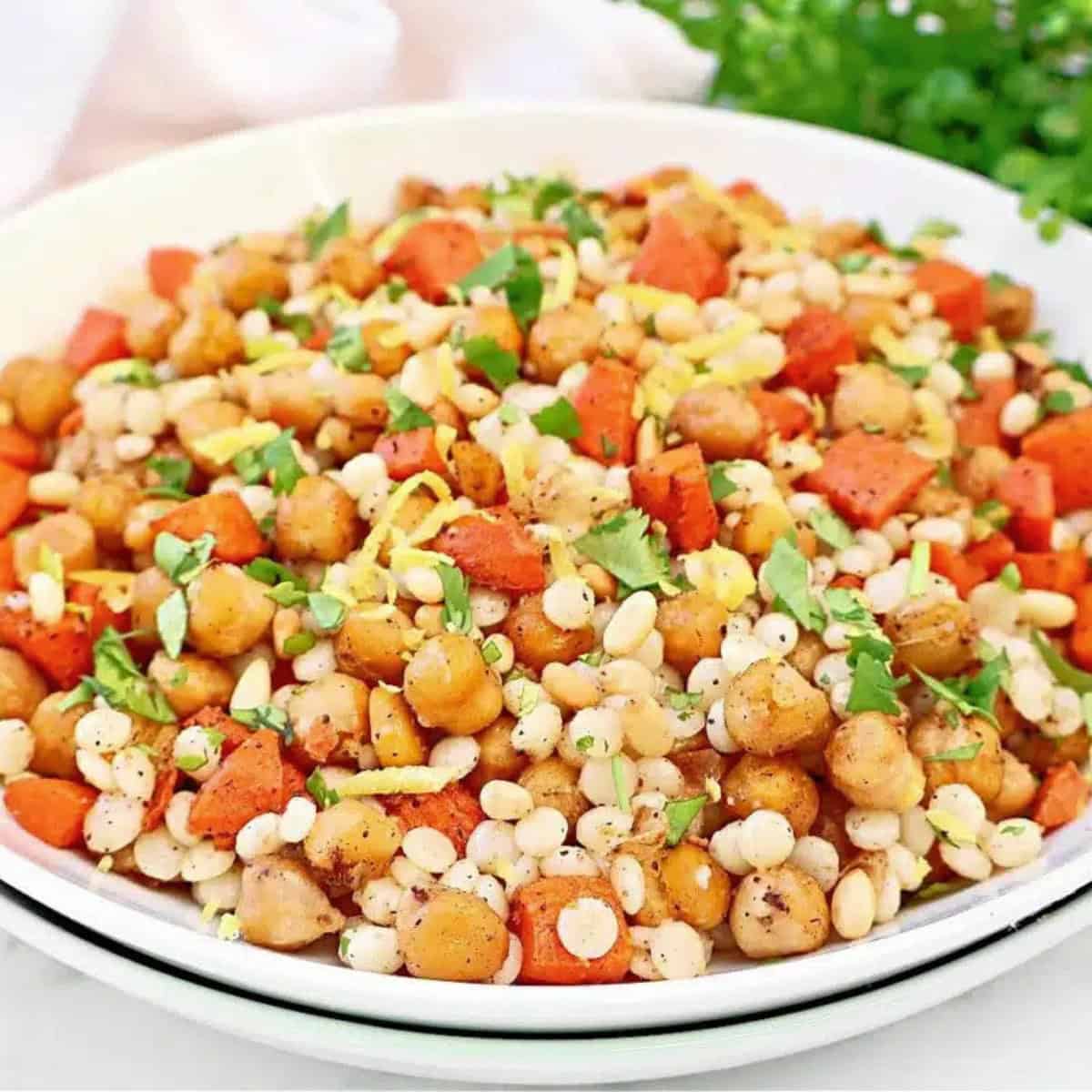
Baharat is a warm and fragrant spice blend composed of cinnamon, black pepper, cumin, coriander, and allspice. It's used throughout Lebanon, Syria, and the Gulf states.
In this recipe it's used to flavor roasted chickpeas and pearl couscous (Israeli couscous), which absorbs the spice blend beautifully during cooking.
4. Maghmour (Lebanese Moussaka)
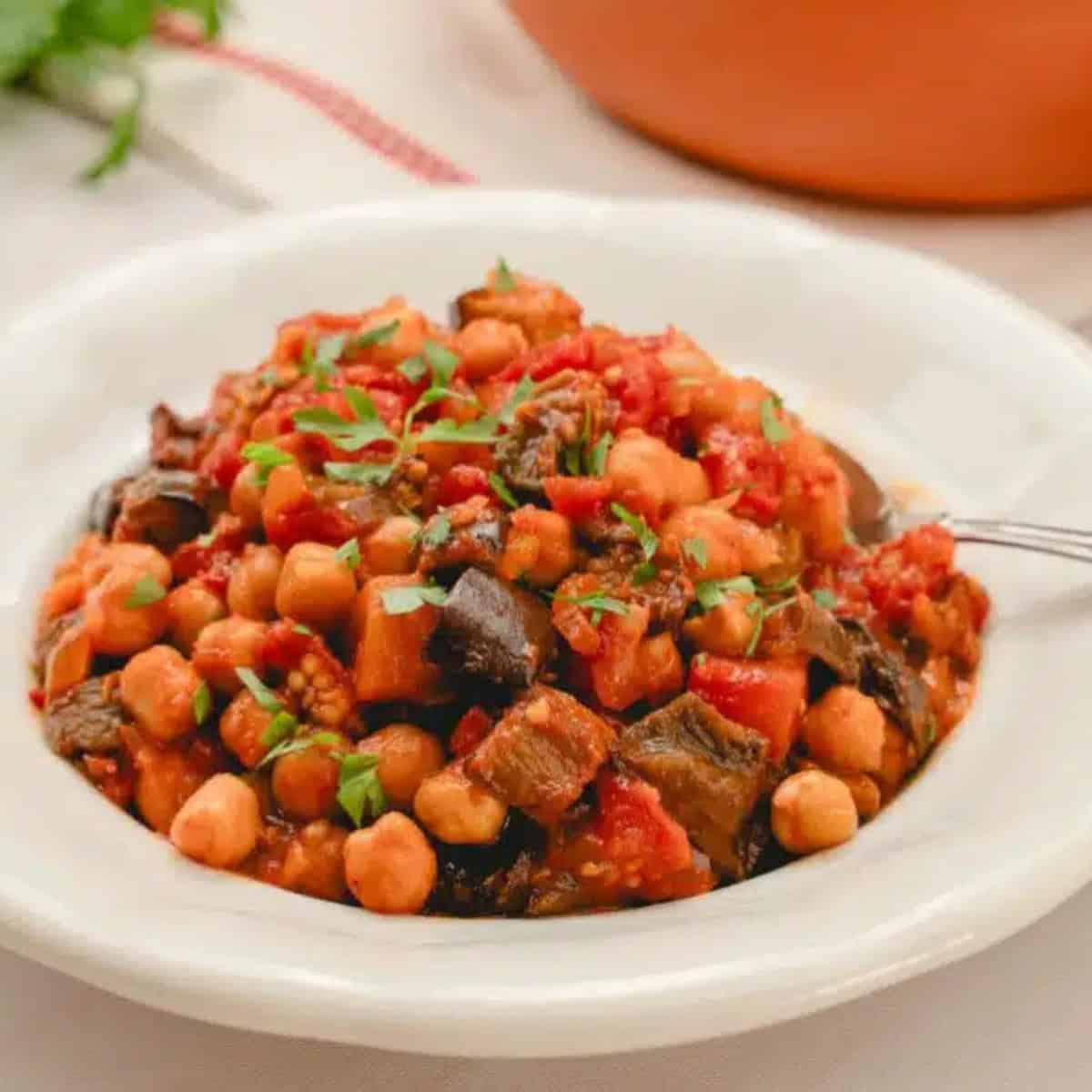
Maghmour is not the Greek baked layered casserole. The Arabic word means "submerged," and this dish is more like a thick stew.
It's roasted or fried eggplant simmered with chickpeas in a garlicky, spiced tomato sauce until everything is soft and the sauce thickens around the vegetables. It's a great dish that you can serve with rice and bread as a main course or serve it room temperature as part of a mezze spread.
5. Lahana Sarması (Turkish Cabbage Dolma)
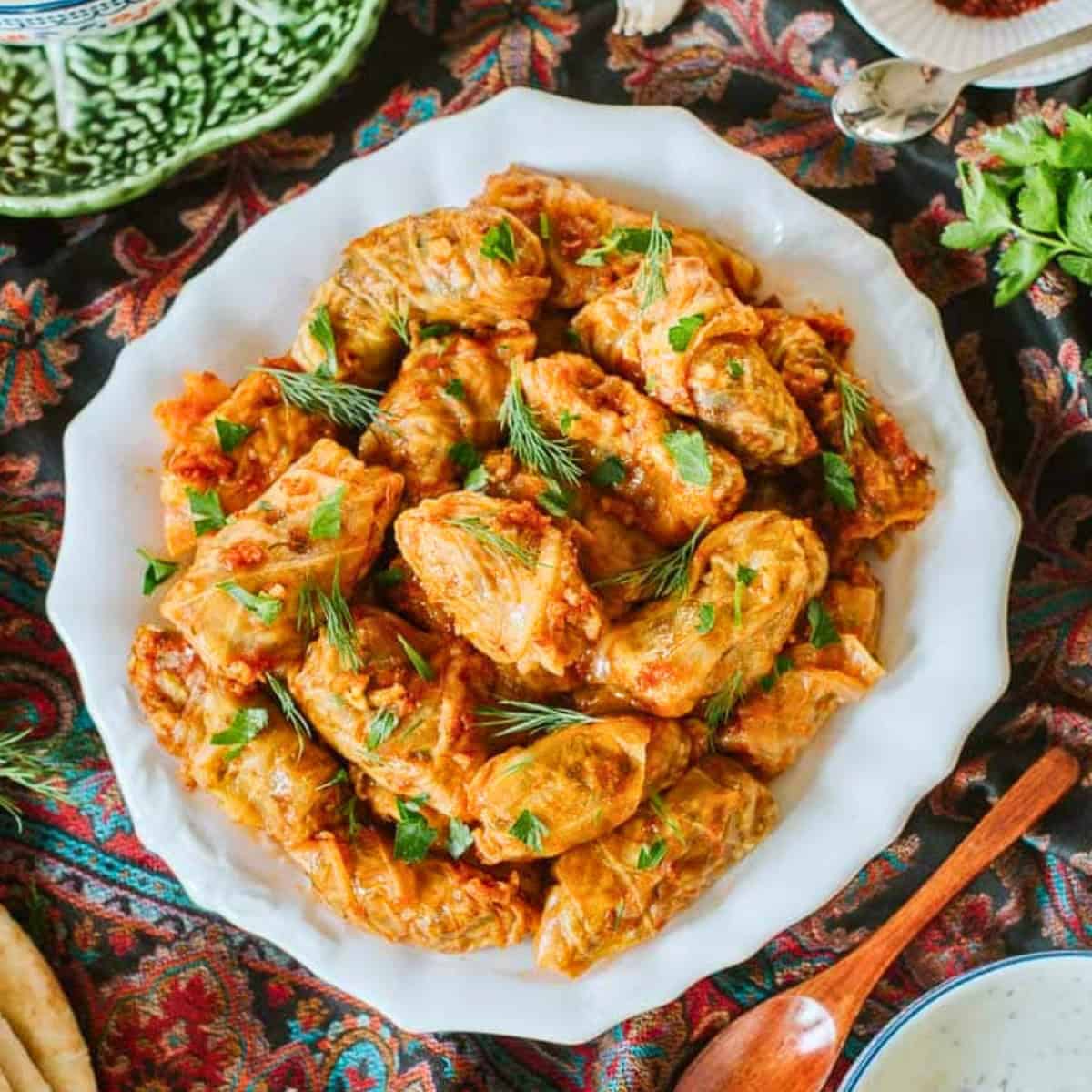
Dolma appears throughout the Middle East and Mediterranean in many forms. This Turkish version stuffs savory herbed rice into tender cabbage leaves and slowly cooks them until the flavors fully meld together.
The filling is entirely vegan. You can serve dolma as the main course with sides or as part of a mezze.
6. Easy Vegan Biryani
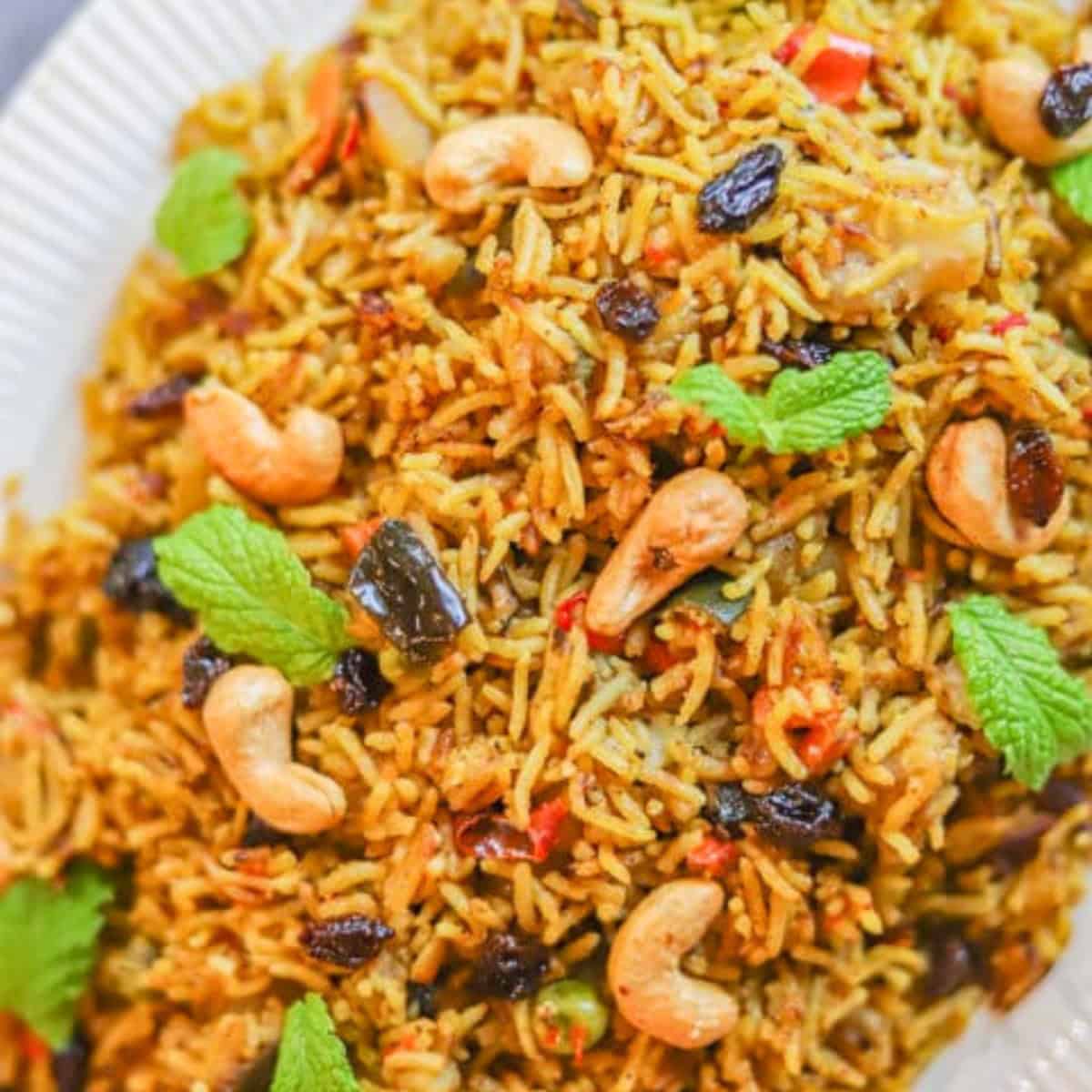
When most people think of biryani, they often think of Indian food, but this classic dish actually spans South Asia and the Middle East.
This version includes eggplant and potatoes, and the dish is then finished with toasted cashews and raisins. It's a flavorful and filling vegan dish.
7. Imam Bayildi (Turkish Stuffed Eggplant)
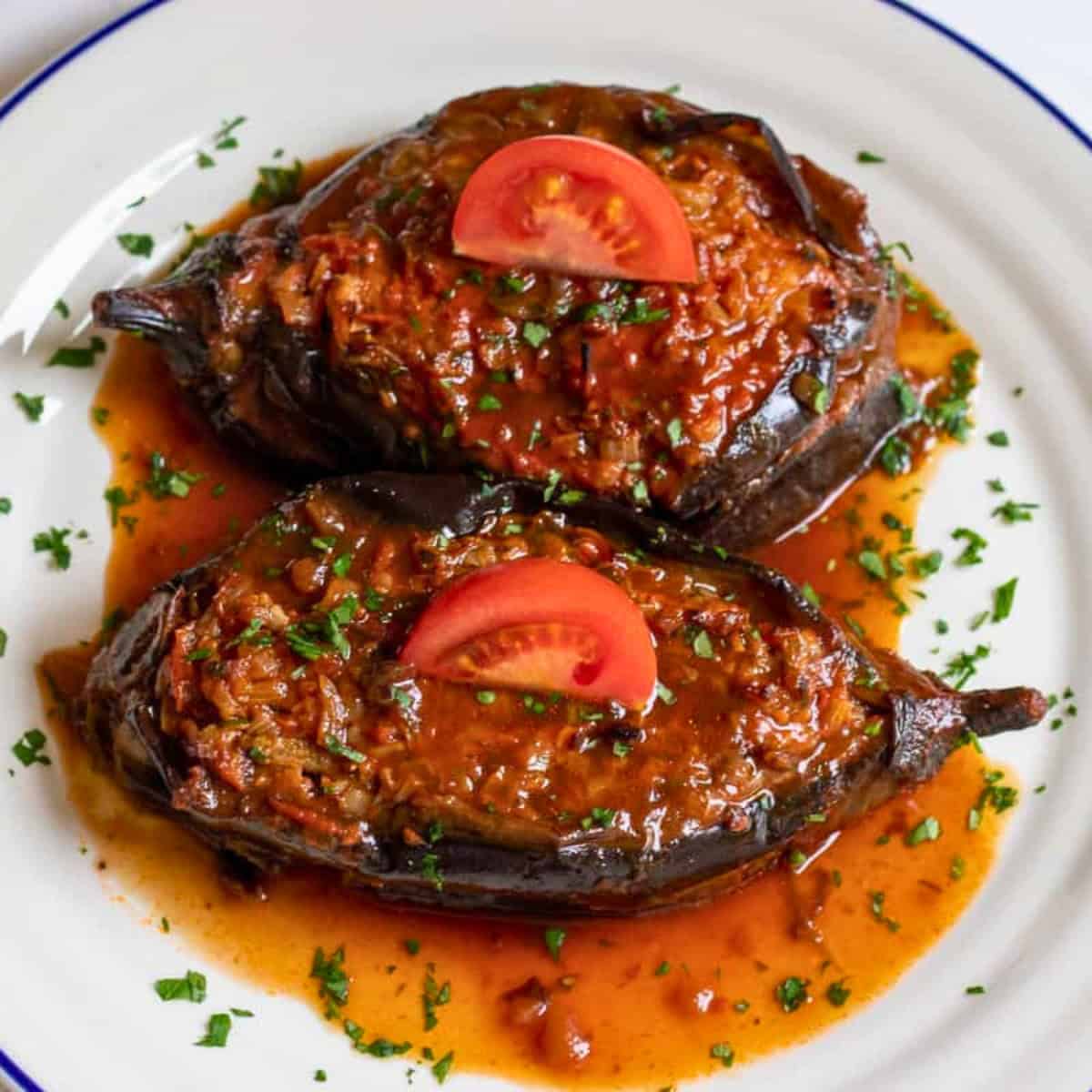
Imam Bayildi is one of the most iconic dishes in Turkish cuisine, known for its rich flavors and melt-in-your-mouth texture. This traditional dish features eggplants stuffed with a savory mixture of onions, tomatoes, and garlic.
I've served this dish as a main course with rice and salad, and served it as an appetizer with pita. It's incredibly delicious and a must-try.
Sides, Staples, and Sauces
These vegan Middle Eastern recipes are the building blocks that complement the other recipes. Whether you need a side, a main, or a sauce, these are some of my favorites.
1. Arabic Rice with Vermicelli
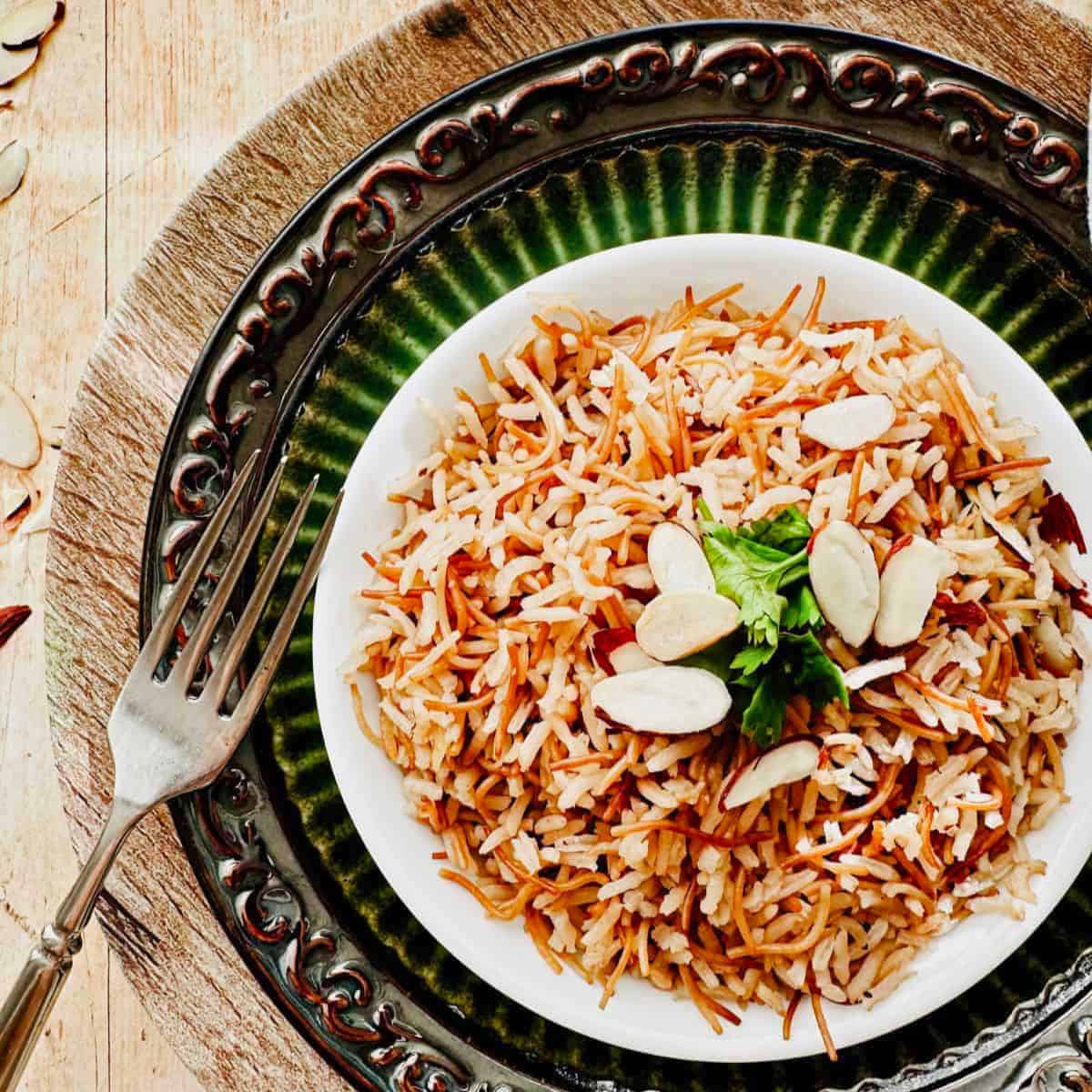
If you've eaten at a Lebanese or Syrian restaurant, you've probably had this side dish. It's long-grain basmati rice, toasted with broken vermicelli noodles in vegan butter until golden, then cooked in broth.
It works well as a side with nearly any Middle Eastern dish and can also easily be turned into a main dish by simply adding some protein like beans.
2. Turkish Potato Salad (Patates Salatasi)
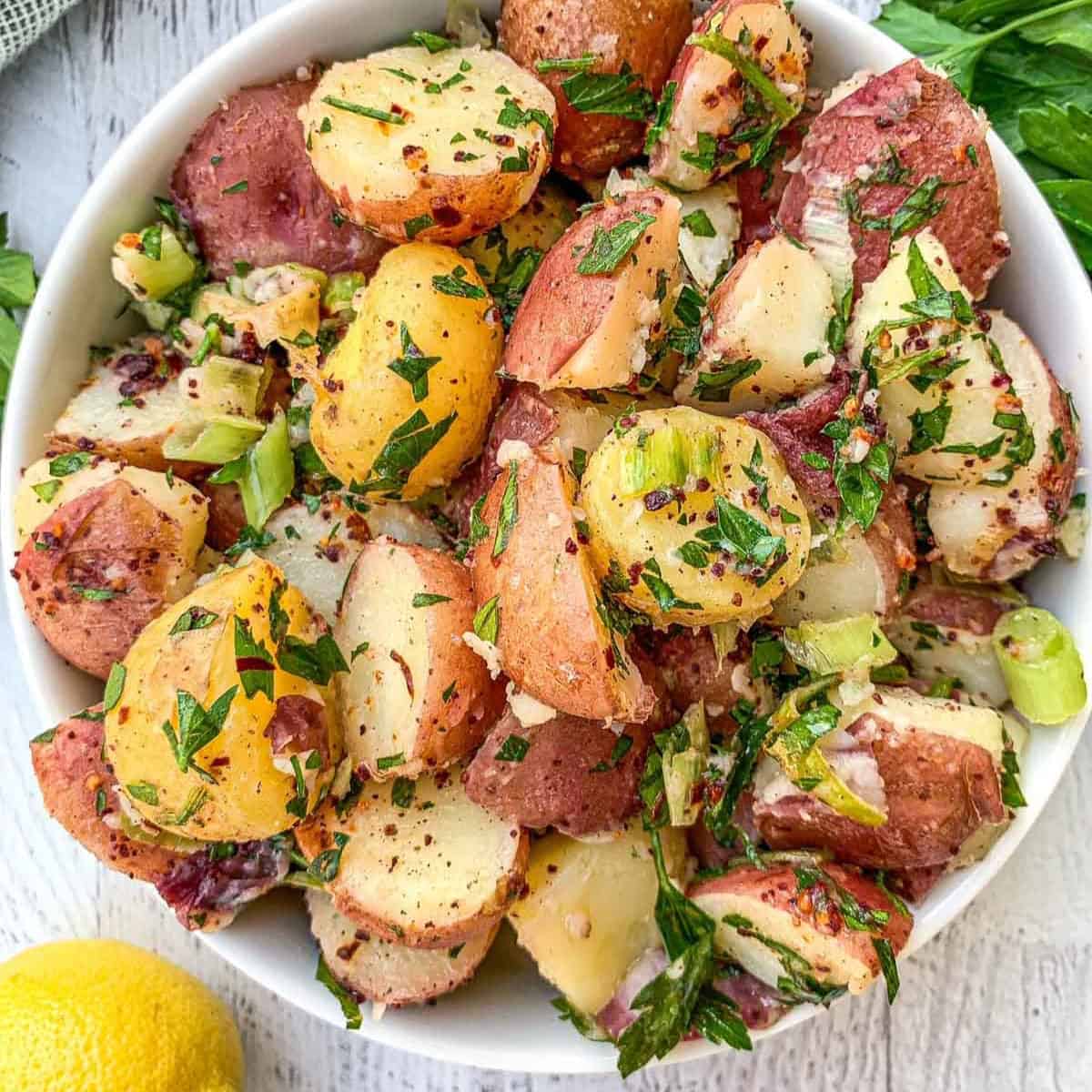
Turkish potato salad is nothing like the mayo-heavy Western version. Boiled potatoes are dressed with olive oil, lemon juice, fresh parsley, red onion, and paprika to create a bright and herby side dish.
It's often served as part of a Turkish mezze spread or as a side dish, either warm or at room temperature.
3. Lebanese Green Beans (Lubee)
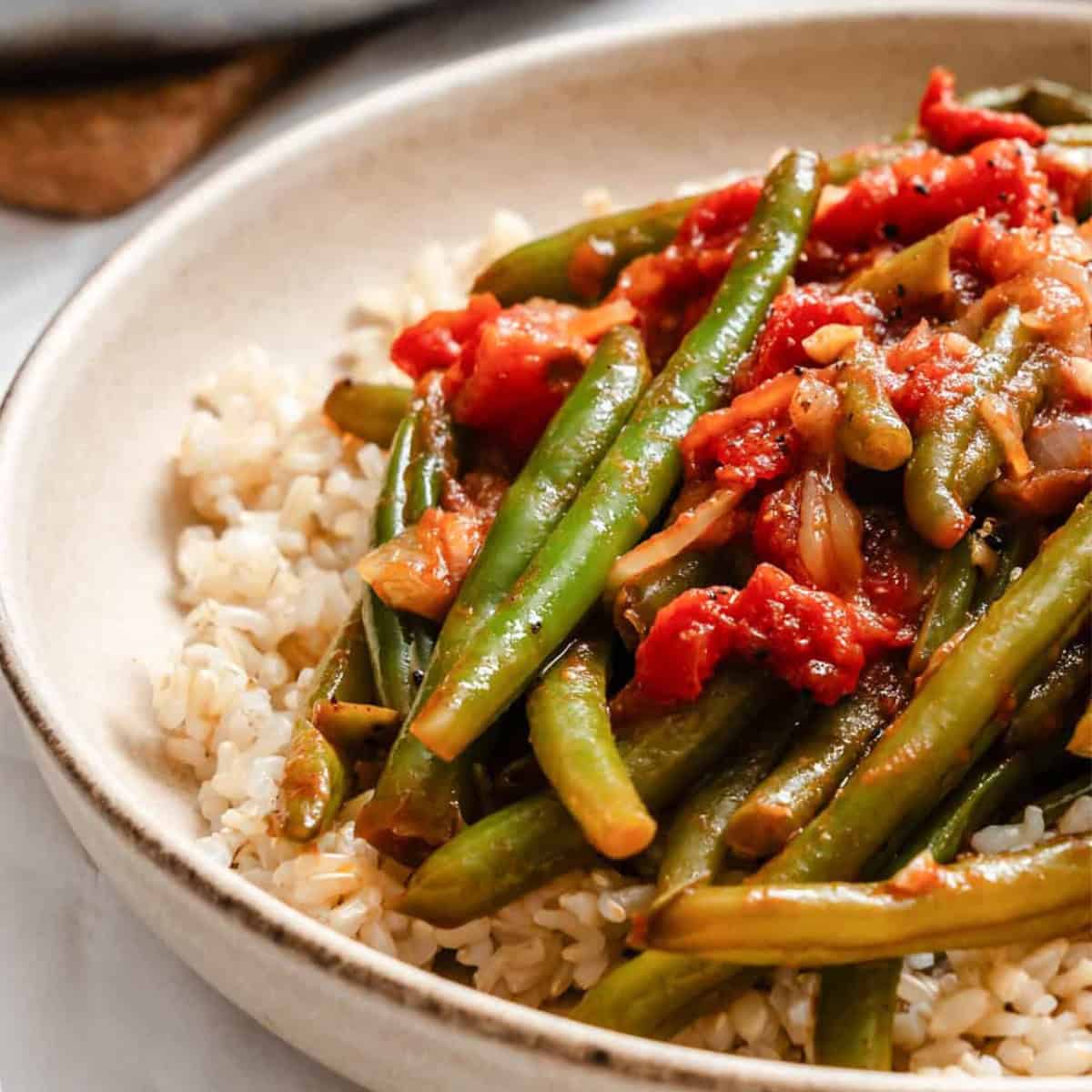
Looking for super simple Lebanese vegan food? Lubee (also spelled loubieh bi zeit) is green beans simmered in a garlic and tomato sauce flavored with cinnamon and cumin until tender.
It's a simple and quick dish that goes with just about anything.
4. Batata Harra
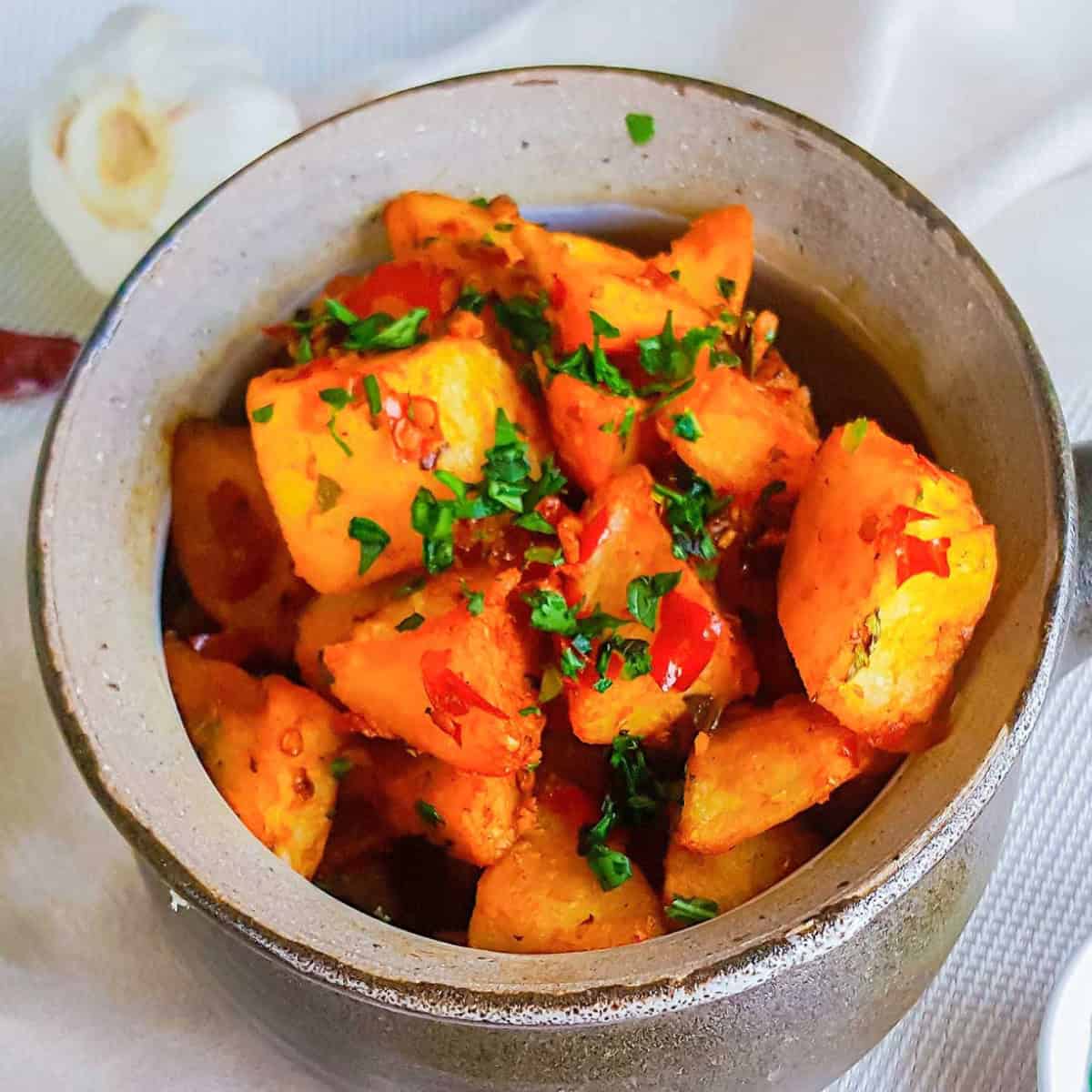
Batata harra means "spicy potatoes" in Arabic. This recipe is crispy fried or roasted potato cubes tossed with garlic, red chili, cilantro, lemon juice, and olive oil.
It can be served as an appetizer or a side dish.
5. Middle Eastern Pickled Turnips

The brilliant magenta pickled slices you find inside every good falafel sandwich and alongside grilled dishes in Levantine street food are white turnips pickled with a small piece of red beet in a vinegar and salt brine.
They're sharp, acidic, and slightly earthy, cutting through the richness of tahini, hummus, and fried food perfectly.
6. Garlic Tahini Sauce
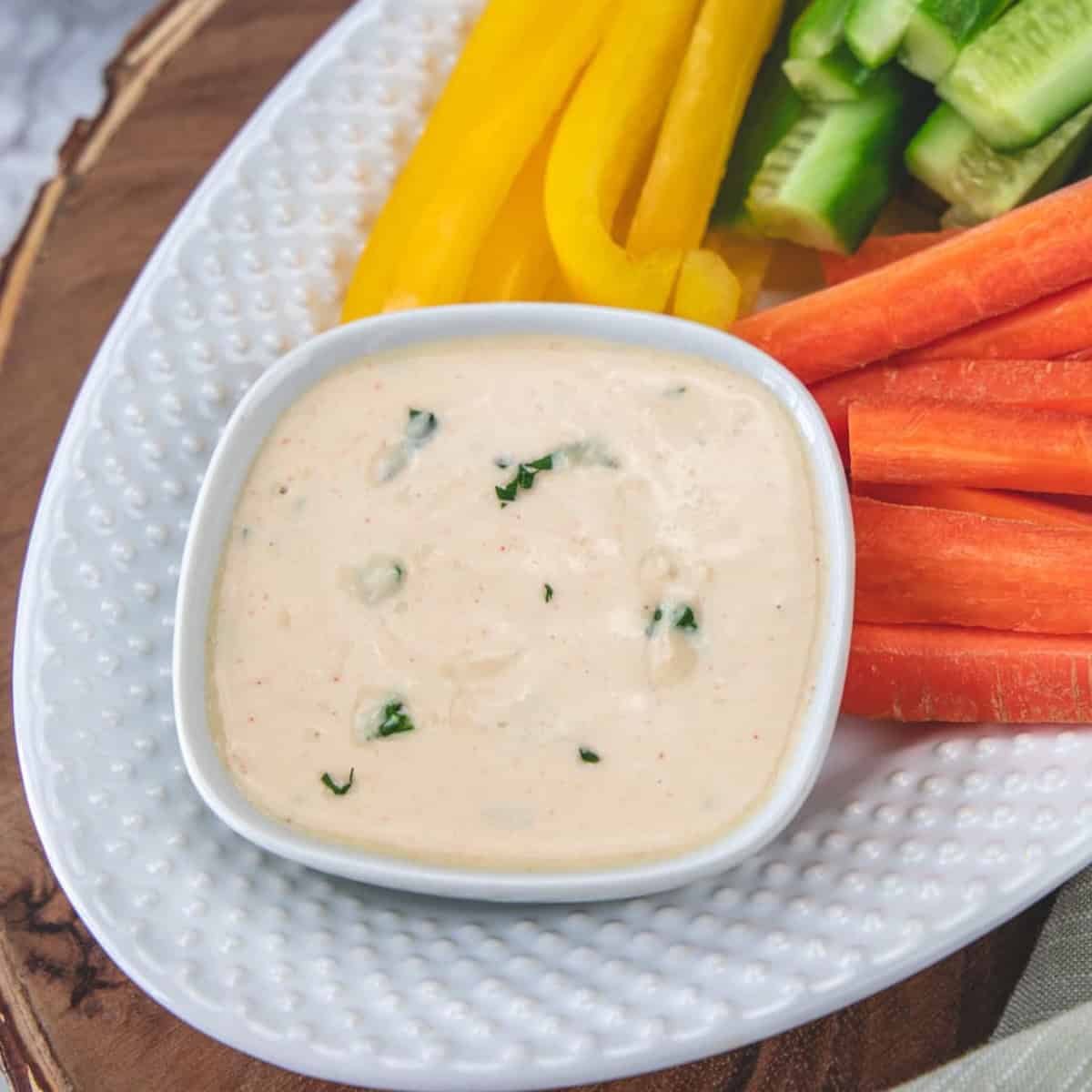
This is a more garlic-forward version of tahini sauce. It's more pungent and savory than lemony versions.
It's great for dipping falafel and vegetables, spreading on sandwiches, or drizzling on grain bowls.
7. Schug Sauce (Middle Eastern Hot Sauce)
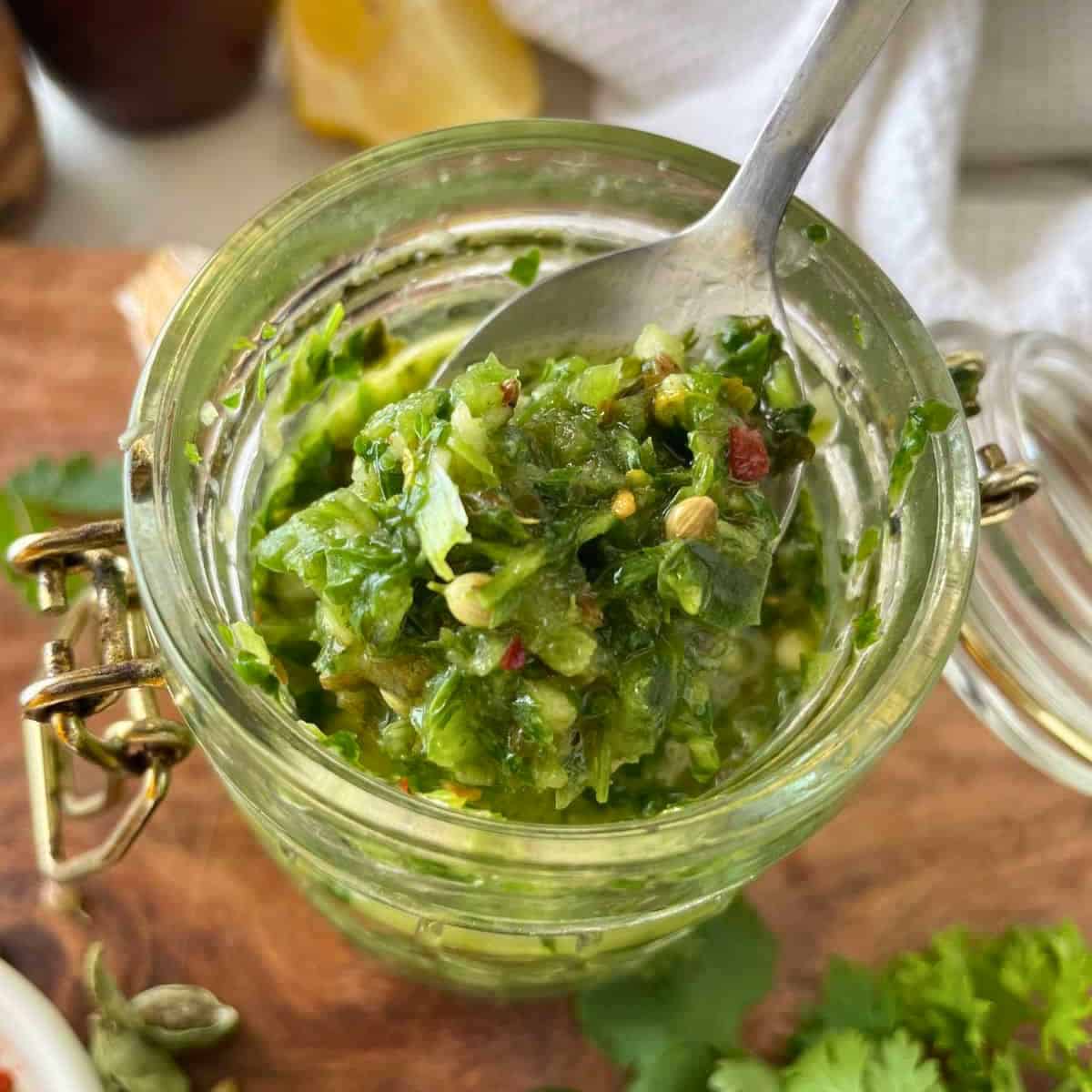
Schug (also spelled zhug or zhoug) is a Yemenite green hot sauce made from fresh cilantro, parsley, jalapeños, garlic, cumin, coriander, and cardamom blended with olive oil and lemon juice into an intensely herby, fiery condiment.
Ready in under 10 minutes!
8. Lemon Herb Tahini Sauce
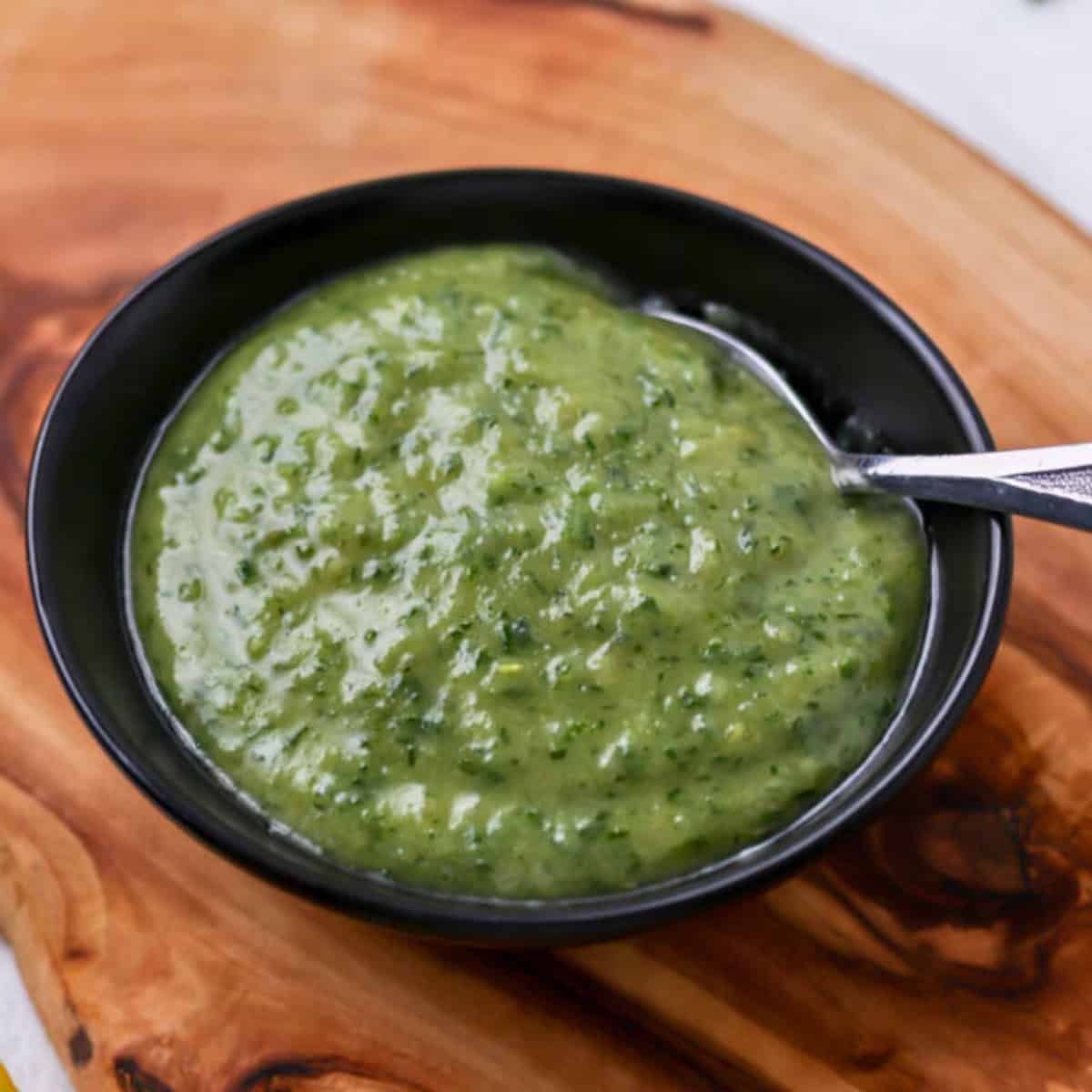
This is no ordinary lemon tahini sauce! It's made with fresh herbs blended together with tahini and lemon, making it a beautiful green!
I love to drizzle it on grain bowls, falafel, roasted vegetables, or anything I can think of.
Frequently Asked Questions
Many Middle Eastern dishes are naturally vegan, given that legumes, grains, and vegetable-based dishes have always formed the foundation of the cuisine. Of course, meat-based dishes exist too, but plant-based cooking has deep roots throughout the region.
Mezze is the style of eating common across the Middle East and Eastern Mediterranean. It's a collection of small dishes set out together for sharing, rather than individual plates.
A typical vegan mezze might include dips (hummus, baba ganoush, muhammara), a grain salad, fresh vegetables, warm bread, and pickles.
Yes! Most of the basics like tahini, chickpeas, lentils, za'atar, and sumac are now widely available at mainstream grocery stores. A few specialty ingredients (dried Persian limes, pomegranate molasses, Aleppo pepper, fenugreek, etc) are easier to find at Middle Eastern, Indian, or Persian grocery stores, but you can now easily find them online too.
❤️ One Last Thing! If you make any of these vegan Middle Eastern recipes, please leave a review and rating to let me know how you liked them! Doing so helps other readers! Your feedback makes a difference.
Leave a Reply